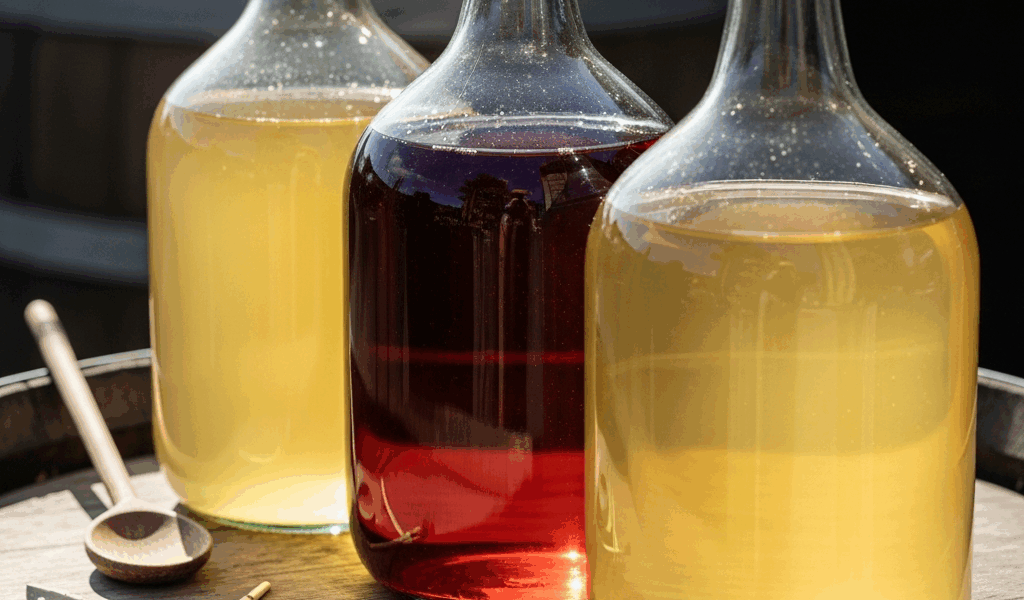
Why Your Wine Smells Like Sulfur
Homemade wine has gotten complicated with all the conflicting advice flying around about sulfur smells. As someone who has opened more than a few carboys to that gut-punch rotten-egg stench, I learned everything there is to know about diagnosing the actual problem instead of throwing random fixes at it. Today, I will share it all with you.
Here’s the thing most guides skip: sulfur odors in wine aren’t one problem. They’re three completely different problems wearing similar disguises. Hydrogen sulfide (H2S) hits you like rotten eggs or a struck match — it develops when yeast gets stressed during fermentation, usually from nutrient deficiency or temperature swings. Catches early, fixes easy. Then there are mercaptans, which smell like cooked cabbage, garlic, or onions. They form when H2S bonds with alcohol compounds already in the wine. Think of mercaptans as H2S that made a long-term commitment. Finally, excess free SO2 produces a sharp, pungent struck-match smell — noticeably different from rotten egg — and it happens when you’ve added too much sulfite at crushing or after fermentation wrapped up.
The smell you’re detecting tells you exactly which fix to attempt. Probably should have opened with this section, honestly — it saves hours of pointless racking.
Fix 1 — Hydrogen Sulfide from Stressed Yeast
H2S shows up when yeast runs low on nutrients or hits temperature stress mid-fermentation. The yeast struggles, its metabolism goes sideways, and that sulfur stench is essentially its distress signal. Catch it while fermentation is still actively bubbling and you’ve got the best possible window for fixing this.
Immediate Action: Splash Racking
Splash racking off-gases H2S fast. Pour the wine from one carboy to another — deliberately, with real splashing and surface agitation. Let oxygen contact the wine as it falls. Do this once a day for three days. H2S escapes as a gas, and you’ll notice the smell dropping after the very first rack. It’s almost satisfying, honestly.
If Fermentation Is Still Active
Add yeast nutrient or diammonium phosphate (DAP). Use about 1 gram per gallon of DAP if fermentation has stalled, or grab a complete nutrient pack like Fermaid K — label rates run around 2.5 grams per gallon. Stir gently to avoid oxidation. The yeast gets what it needs, fermentation picks back up, and H2S production stops.
Don’t make my mistake. My first batch, I racked that wine three times over two weeks before I figured out the yeast just needed feeding. One dose of Fermaid K at around $14 for a 100-gram bag would have fixed it in 24 hours. I apparently learn things the expensive, labor-intensive way and that nutrient addition works for me now while endless racking never really did.
Copper Fining for Stubborn H2S
If racking and nutrients haven’t cleared the smell within a week, copper fining accelerates removal. A copper pipe or copper mesh briefly introduced to the wine catalyzes the conversion and precipitation of remaining H2S compounds. Simple chemistry.
Use restraint here. A 30-second gentle stir with a copper mesh ball — the kind with a stainless steel handle, available for $8–15 online — or a 3-inch copper pipe submerged for one day is genuinely sufficient. Excess copper creates new problems entirely. Test the smell after 24 hours. Gone? Pull the copper immediately. Still faint? Another 24-hour soak is acceptable. More than two days of contact is overkill — and risks copper toxicity in the finished wine.
Fix 2 — Mercaptans That Survived Racking
But what is a mercaptan? In essence, it’s H2S that chemically bonded with alcohol molecules already present in the wine. But it’s much more than that — it’s a fundamentally different compound that doesn’t respond the same way racking-friendly sulfur gas does. These are older, more stubborn, and they’re not just floating around waiting to escape.
Splash racking still helps — you might knock the smell down 40–60 percent. That’s worth doing. But mercaptans often linger because they’re integrated into the wine at a chemical level, not just dissolved gas you can shake loose.
Copper Fining for Mercaptans
Copper fining might be the best option here, as mercaptan treatment requires direct precipitation rather than aeration. That is because copper physically pulls the sulfur compounds out of solution in a way that racking simply cannot replicate.
Same method as above — copper piece stirred or submerged for 24–48 hours. With mercaptans, you may genuinely need the full two days. Smell and taste after day one. Clear improvement? Pull it out. Still strong? Leave it one more day. Hard stop at 48 hours total contact, no exceptions.
Honest Expectations
Some mercaptan problems — wine that’s been sitting in a carboy for six months with that persistent cooked-cabbage smell baked in — don’t respond fully to home fining methods. At that point, professional fining agents like Polyclar VT become necessary. For most home batches, that expense honestly exceeds what the wine is worth.
That’s what makes catching H2S early so endearing to us home winemakers. Fix the hydrogen sulfide during active fermentation and mercaptans never form in the first place. The whole second problem disappears.
Fix 3 — Too Much Sulfite Added
Sharp, pungent struck-match smell — not rotten egg, but sharp and almost chemical — means excess free SO2. You over-sulfited at crush or after fermentation ended. Happens constantly. The fix is actually the most straightforward of the three.
Off-Gas the Excess
SO2 is volatile. It escapes as gas when exposed to air. So: aggressive splash racking daily for five to seven days. Open the carboy to air between rackings when possible. The sharp smell drops noticeably with each cycle — you can genuinely track progress by smell alone. By day five, most batches are in good shape.
Testing and Future Prevention
First, you should invest in an SO2 titration kit — at least if you plan to keep making wine beyond one or two batches. Vinmetrica makes a reliable one, and basic lab kits run $25–40. Test your free SO2 after the smell clears. Target 25–35 ppm free SO2 for most dry table wines. That range protects the wine without creating the pungency.
Going forward, use a sulfite calculator before adding SO2. Dozens of free online tools let you plug in wine volume and desired target, then spit out exactly how many grams to add. No guessing. That was a game-changer for me around my third year.
How to Prevent Sulfur Smells in Future Batches
So, without further ado, let’s dive into prevention — because troubleshooting after the fact is genuinely worse than just avoiding the problem.
- Use complete yeast nutrient — Add a blend of DAP, yeast hulls, and vitamins from the start. Go-Ferm at rehydration and Fermaid K at mid-fermentation run $12–20 per batch combined and eliminate most H2S risk before it starts.
- Don’t over-sulfite — Use a calculator, not intuition. “A pinch seems right” is how you end up with a carboy of struck-match wine you’re airing out for two weeks.
- Keep fermentation temperature stable — Aim for 65–75°F for most wine yeasts. Temperature swings trigger yeast stress, which triggers H2S. A temperature-controlled chest freezer with a thermostat controller — around $40–60 for the controller alone — fixes this if your house runs inconsistent.
- Rack promptly off heavy lees — Wine sitting on dead yeast sediment for months produces H2S as that sediment breaks down. Rack to a clean carboy within 4–6 weeks of fermentation finishing. Mark it on a calendar if you have to.
- Choose yeast strains wisely — Lalvin EC-1118 and certain Montrachet strains run notorious for H2S production under any stress. Premier Cuvée and Uvaferm 43 run noticeably cleaner. Worth doing the research before you order.
Sulfur smells are fixable. They’re also extremely common — I’d argue most home winemakers hit this at least once. It’s not a sign your batch is ruined or that you’ve done something fundamentally wrong. It’s a diagnostic signal, and now you know what it’s actually telling you instead of guessing at a fix and hoping something sticks.

Stay in the loop
Get the latest winemaker's friend updates delivered to your inbox.