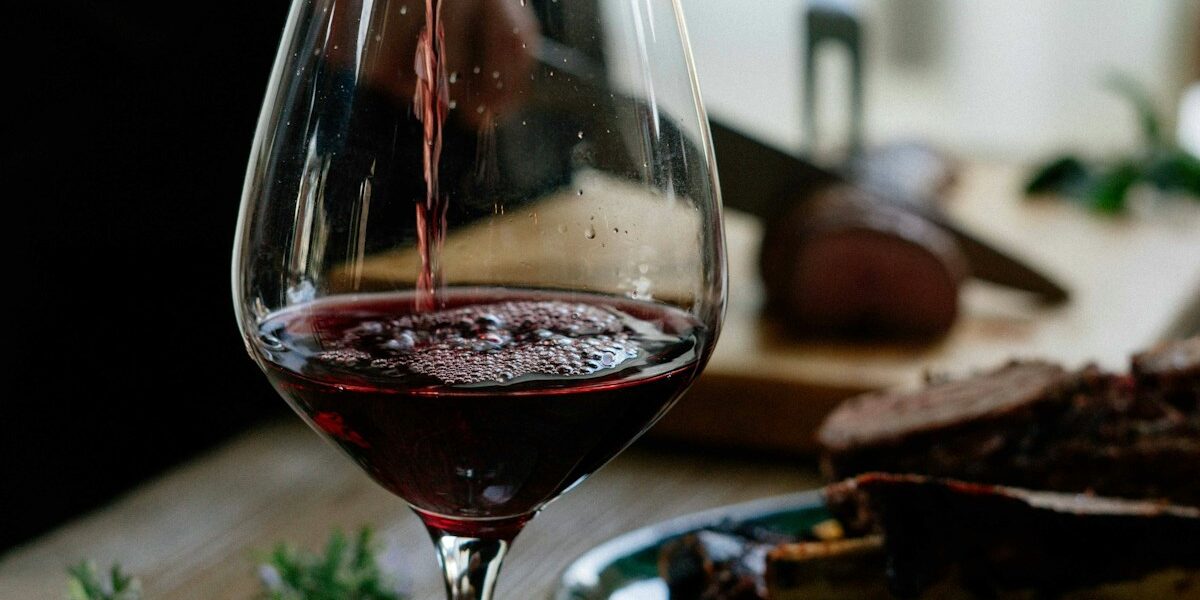
Cabernet Sauvignon was probably the first wine I learned to talk about with any confidence, because it’s the one that got explained to me clearly early on. A family friend who’d been collecting wine for decades sat me down with a glass of Napa Cab and walked me through it — the blackcurrant, the cedar, the tannin structure, the reason it needed time to open up. Everything he described, I could find in the glass. That experience of having a framework while you’re tasting is what turns wine from “this tastes like wine” into something you can actually engage with.
The Grape’s Origins
Cabernet Sauvignon is a natural cross between Cabernet Franc and Sauvignon Blanc, which occurred somewhere in Bordeaux in the 17th century. DNA analysis in the 1990s confirmed the parentage. The grape inherited Cabernet Franc’s thick skin and structural tannins and Sauvignon Blanc’s aromatic qualities and acidity, producing a variety that is simultaneously robust and complex. From Bordeaux it spread globally, and it’s now the most widely planted red wine grape in the world — grown in every major wine-producing country.
The Characteristics That Define It
The first thing most people notice about Cabernet Sauvignon is the tannins — that drying, slightly grippy sensation in the mouth. Tannins come from the grape skins, seeds, and stems, and Cabernet’s thick-skinned berries produce substantial amounts. Young Cab can be quite tannic. This is why it benefits from decanting and why it ages so well: over time, tannins polymerize and soften, the wine becomes more integrated, and complexity develops that wasn’t present when it was young.
Cabernet’s acidity sits at medium to high — enough to give the wine freshness and to support aging. Without good acidity, Cabernet would be a one-note experience. The combination of tannin and acidity is what gives the best examples their architecture, the structure that lets them develop for decades.
Flavors: What’s Actually In the Glass
Blackcurrant (cassis) is the signature flavor of Cabernet Sauvignon — it’s so characteristic that it’s one of the most reliable indicators you’re drinking Cab even in a blind tasting. Black cherry and plum accompany it. Secondary flavors from oak barrel aging include cedar, cigar box, tobacco, vanilla, and sometimes graphite. Violet or floral notes are common, particularly in wines with some age.
In cooler climates (or when grapes don’t fully ripen), there’s a distinctive bell pepper or eucalyptus character from a compound called methoxypyrazine. Bordeaux Cab in lean vintages can have this quality. Some drinkers find it appealing; others find it vegetal and prefer the riper, warmer-climate Cabs where it’s absent. Australian Cabernet — particularly from Coonawarra — often has a eucalyptus or mint character that’s considered distinctive and positive.
Where It Grows Best
Bordeaux’s Left Bank is the originating benchmark — Pauillac, Saint-Estèphe, Margaux, and the other Médoc communes. Bordeaux Cabernet is almost always blended with Merlot, which softens the Cab’s austerity in young vintages. The Atlantic Ocean moderates temperatures, allowing slow, even ripening. The best Bordeaux châteaux are among the longest-lived wines in the world.
Napa Valley in California is the most celebrated New World source. The warmer climate produces fully ripe fruit — more opulent, with plush tannins, higher alcohol, and dark fruit that’s more immediately accessible than young Bordeaux. The wines are often powerful when young rather than requiring years to open up. Wines from Stag’s Leap District, Oakville, and Rutherford are the most acclaimed. California Cab at the upper end of the market is among the world’s most expensive wine.
Chile’s Maipo Valley produces Cabernet with good earthy depth and mineral complexity at prices that consistently outperform equivalent Napa wines dollar-for-dollar. Concha y Toro’s Don Melchor from Maipo, for example, is world-class at a fraction of the price of comparable Napa bottles. Argentina makes Cabernet too, though Malbec is the flagship.
Australia’s Coonawarra region, with its terra rossa soil over limestone, produces Cab with a distinctive eucalyptus or menthol quality alongside the dark fruit. Margaret River in Western Australia makes some of Australia’s most refined Cabernet. South Africa’s Stellenbosch produces Cab with an earthy, sometimes smoky quality influenced by the soils and bush vine farming common there.
Winemaking: Oak, Time, and Decisions
After fermentation, Cabernet Sauvignon is typically aged in oak barrels — often for 18 months to two years before bottling. French oak is the standard in Bordeaux and many New World producers; American oak is sometimes used in California, particularly for a more vanilla-forward, coconut-hinting style. New oak is expensive and assertive; neutral oak (barrels used for multiple previous vintages) adds less flavor and allows the grape to speak more clearly. Most producers use some percentage of new oak alongside neutral, adjusting the ratio based on the vintage’s strength and the intended style.
The choice of when to harvest is equally consequential. Earlier picking preserves acidity and keeps alcohol lower but may mean less phenolic ripeness. Later picking gives more concentrated flavor but risks high alcohol and overripe character. This balance — physiological ripeness versus analytical ripeness — is the central conversation in Cabernet viticulture.
Food and Serving
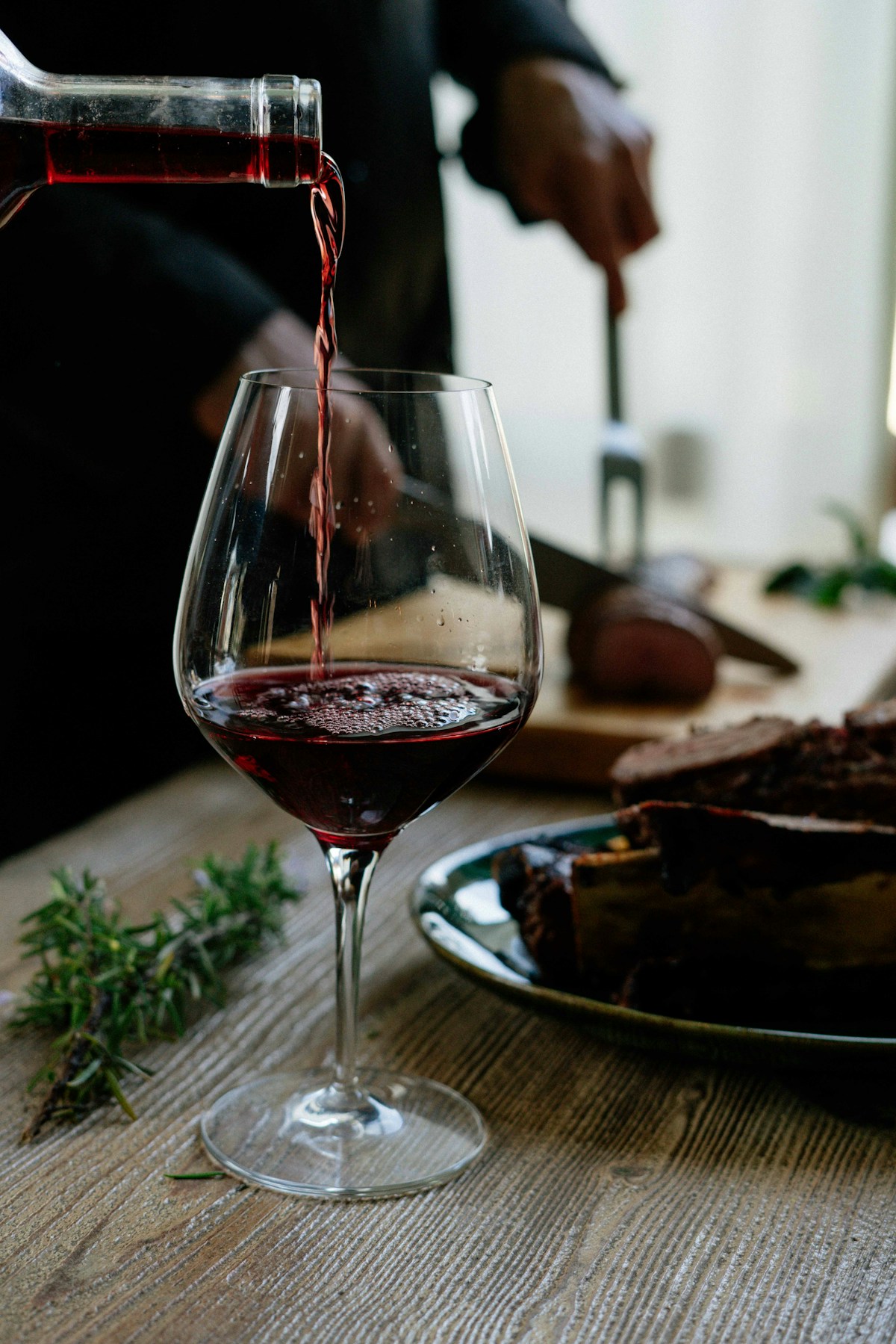
Grilled beef is the natural partner. The tannins in the wine bind to protein and fat in the meat, creating a harmony where both seem better in combination than either would alone. Lamb, venison, and other red meats work similarly. Hard aged cheeses like cheddar and Manchego complement the structure. Avoid pairing high-tannin Cab with very spicy food — the combination amplifies both the tannic grip and the heat perception.
Serve at 60–65°F. Decant young wines (under 8–10 years) for at least 30 minutes to an hour. Store on the side at 55°F, away from light and vibration. Top Cabernet from strong vintages can age 20–30 years; everyday Cab should be consumed within 5 years of release.

Stay in the loop
Get the latest winemaker's friend updates delivered to your inbox.