What Oxidation Does to Homemade Wine
I made my first batch of wine at 22 with zero guidance beyond a YouTube video and a kit from the grocery store. Three months in, I noticed the color had shifted from deep purple to brick brown. The smell hit me first—sharp vinegar notes replacing the fruit character I’d anticipated. That’s oxidation. It’s one of the most common reasons batches fail, and it happens silently during fermentation.
Oxidation is oxygen’s slow attack on your wine. When oxygen contacts wine, it reacts with phenolic compounds and other vulnerable molecules. The process accelerates during fermentation when yeast activity is highest and the wine is most exposed to air. You’ll recognize oxidation by three unmistakable signs: browning of the liquid itself, a flat or dull flavor profile, and vinegar or sherry-like aromas that shouldn’t be there.
Here’s the annoying part? By the time you taste oxidation, it’s too late. You can’t reverse it. Prevention is everything.
Seal Your Fermentation Vessel Properly
Probably should have opened with this section, honestly. An airlock is your primary defense, and getting it right eliminates 70% of oxidation problems.
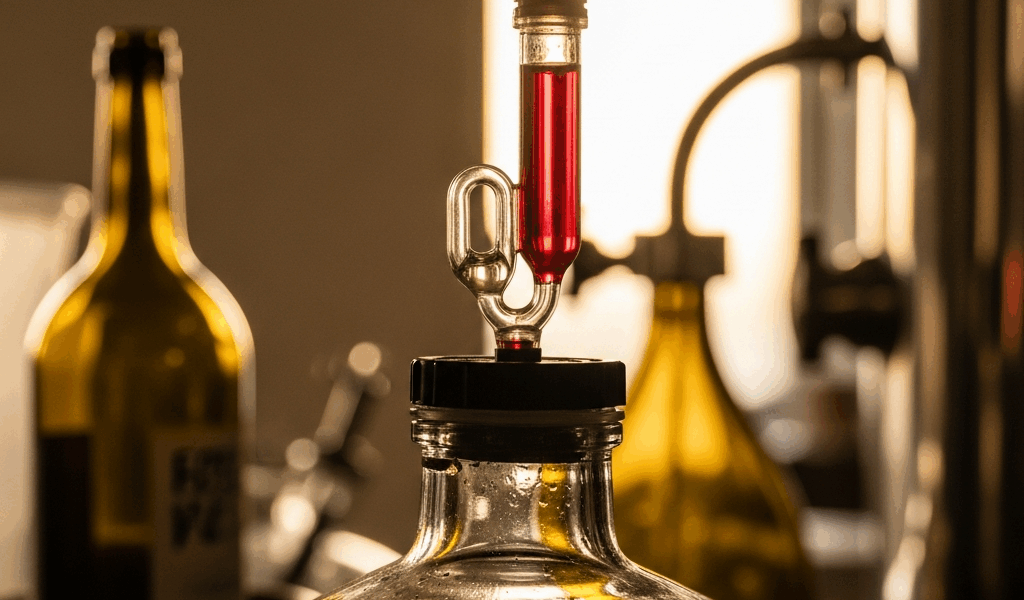
Two main airlock types exist. S-shaped airlocks (also called S-locks) are cheap and common—you’ll find them for around $1-2 each. They work by allowing CO2 gas to bubble out while preventing air from flowing back in. The problem? They dry out. If the water seal inside the S-lock evaporates even slightly, air can slip past. I learned this the hard way when a carboy sat undisturbed for two weeks and the water level dropped below the seal line.
Three-piece airlocks—the plastic ones with a center tube, outer chamber, and cap—are better for extended fermentation. They hold water more reliably and cost $2-4. Fill them with a sulfite solution (1 teaspoon potassium metabisulfite per cup of water) instead of plain water. This prevents mold from growing inside the airlock itself, which sounds paranoid until it happens.
That rubber drilled bung matters as much as the airlock choice. A #6.5 or #7, depending on carboy neck width, should fit snugly without forcing. Universal #10 carboy caps work too but require a firm press to create an airtight seal. I’ve seen people use plastic wrap under a bung or cap—don’t. The wrap shifts, air leaks in, and you won’t notice until fermentation is complete.
Check the airlock daily during active fermentation—the first 10-14 days. The bubbling rate tells you fermentation is happening. When bubbling slows to once every 2-3 minutes, you’re nearing the secondary fermentation phase. That’s when seal quality becomes critical because the wine is vulnerable but the vigorous CO2 production no longer provides protective pressure.
Keep the Right Headspace in Your Carboy
Headspace is the gap between the wine surface and the top of the vessel. Too much air contact, and oxidation accelerates. Too little, and your carboy either overflows during active fermentation or risks creating a vacuum seal that damages the airlock.
For a 5-gallon carboy filled with a batch of white or red wine, the wine level should sit 1-2 inches below the neck where it starts to narrow. This 1-2 inch gap is your safety margin. During peak fermentation, CO2 production creates pressure that keeps oxygen at bay. The headspace prevents overflow without creating a stagnant air pocket.
If your carboy is only 75% full (3.75 gallons of wine in a 5-gallon vessel), that’s too much headspace. The extra 1.25 gallons of air creates an oxidation risk zone. I’ve corrected this mistake by using a smaller carboy for secondary fermentation or adding boiled and cooled water to top up, though the latter dilutes the final product slightly.
Secondary fermentation requires a different headspace strategy—once you rack the wine into a fresh carboy, usually after 30 days, fermentation is slower. The wine needs to be topped to within ½ inch of the airlock. This minimizes the air contact zone while allowing the final 1-2 points of gravity to drop over weeks or months. A bung with an airlock can sit at the carboy neck safely at this level.
Transfer timing matters here. Don’t rack too early—you’ll leave behind yeast and introduce air unnecessarily. Don’t rack too late either, or you expose the clearing wine to sediment and dead yeast cells. Rack when the gravity stabilizes for 3-5 consecutive days. For most wines, that’s 20-35 days into fermentation.
Minimize Exposure During Racking and Bottling
Racking and bottling are where winemakers unknowingly oxidize their wine. These steps introduce more air exposure than any other phase.
Start with your siphon choice. A manual siphon—you insert it by mouth, then let gravity flow—introduces air every time you start it. The splash as wine falls into the receiving carboy also aerates it. An autosiphon eliminates the mouth-to-siphon contact and reduces splashing if you use it carefully. They cost $8-15 and are worth every cent. When using an autosiphon, place the receiving carboy lower than the source carboy and run the siphon tube along the inside edge of the receiving carboy as wine flows in. This keeps the surface calm.
Position your source carboy higher than the destination. This creates enough siphon velocity that the siphon tube fills completely, preventing air from entering the tube midway through the transfer. Use a carboy stand or stool to elevate the full carboy. The greater the height difference, the faster the transfer, and the less time wine spends exposed to air.
Never splash. I mean this literally. The wine hitting the bottom of the carboy and splashing up introduces dissolved oxygen. Run the siphon tube to the bottom of the receiving vessel and keep the wine level calm. If splashing happens, you’ve just increased oxidation risk by 30-40%.
Bottling requires similar care. Use a bottling bucket with a spigot and a bottling wand—a tube that attaches to the spigot. Fill bottles from the bottom to avoid splashing. Cap or cork immediately after filling. Leaving filled bottles open to “let them breathe” before capping is a myth that invites oxidation. Cap them. Move on.
For cork bottles, use a hand corker or floor corker depending on your setup. Screw caps work too and eliminate cork taint risk, though they’re less traditional. Both seal immediately and prevent air re-entry.
Storage and Temperature Control Matter Too
Temperature swings during storage can pull oxidation into your wine. When a carboy sits in a warm kitchen during the day and a cold basement at night, the wine expands and contracts. This creates micro-movements in the headspace that draw air past even good seals.
Store fermentation vessels in a place with stable temperature. Basements work well because they fluctuate maybe 10-15 degrees across seasons. A wine fridge at 55°F—ideal for storage—eliminates temperature swings entirely. Kitchen cupboards are terrible. They swing from 68°F to 75°F daily.
Humidity also matters. Carboys with rubber bungs stored in dry air can have bungs that shrink slightly, breaking the seal. Keep storage humidity around 50-60%. This sounds complicated, but it really means: don’t store wine in a hot garage or an air-conditioned room with low humidity.
Once wine is bottled, a cool dark space is enough. A closet, basement shelf, or wine fridge all work. Avoid direct sunlight—UV light causes different oxidation pathways and degrades the wine quickly. Store bottles on their side for cork closures so the cork stays moist and maintains its seal, or upright for screw caps. Don’t store them at angles.
The goal throughout fermentation and storage is consistency. Stable temperature, good seals, minimal air exposure, and proper headspace—these four things prevent oxidation. I haven’t had an oxidized batch since I stopped improvising and started treating these details as non-negotiable.


Stay in the loop
Get the latest winemaker's friend updates delivered to your inbox.