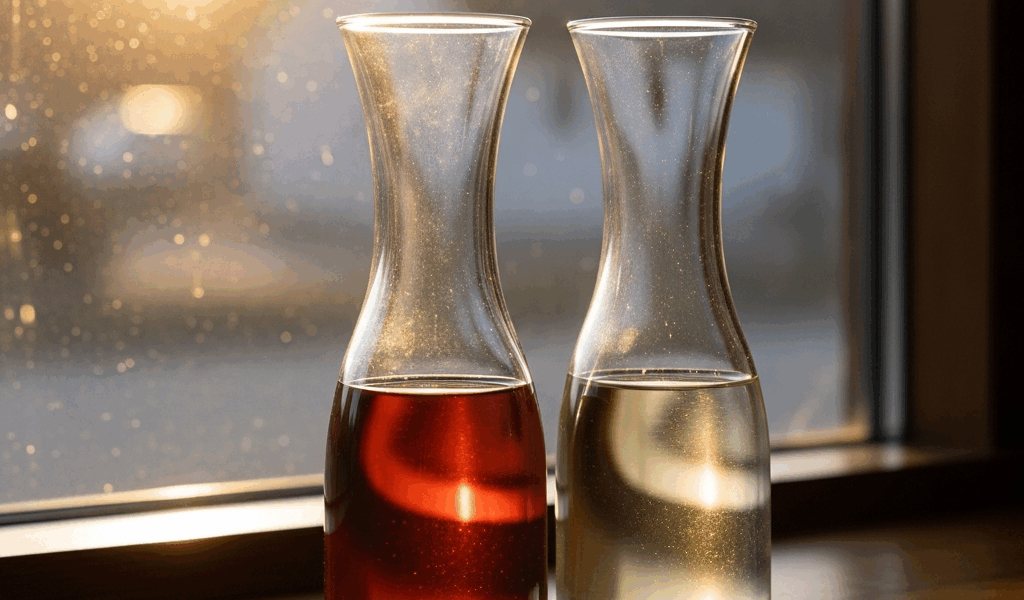
Why Your White Wine Turned Pink or Salmon Colored
I discovered the pink wine problem the hard way. Opened a bottle of homemade Sauvignon Blanc I’d made six months prior, poured it into a glass, and—instead of the pale straw color I expected—out came something that looked like diluted cranberry juice. My first thought was contamination. My second was panic. But here’s what I eventually learned: pink or salmon-colored white wine isn’t necessarily ruined. It’s actually telling you something specific happened, and once you figure out what, you can fix it.
White wine doesn’t naturally turn pink without a reason. Four primary culprits create this specific color shift:
- Oxidation — The most common cause. Oxygen exposure converts colorless phenolic compounds into colored polymers, shifting the wine from clear to pink, then bronze, then brown over time.
- Tannin leaching — Extended contact with grape skins, wooden barrels, or metal equipment (especially older steel or copper) pulls red-pigmented tannins into white wine.
- Wild fermentation — Residual sugars and wild yeast activity in sealed containers can create pink or orange hues as fermentation restarts.
- Metal contamination — Iron or copper traces from equipment or water react with wine compounds, producing pink or brownish discoloration.
That pink stage? It’s crucial. It’s not the same as brown oxidation — which is advanced and typically irreversible — or the murky brown of serious spoilage. Pink is your warning light. Something started, but you might still catch it.
Oxidation — The Most Common Culprit
Oxidation accounts for roughly 70% of the pink-shift cases I’ve encountered in homemaking circles. Here’s how it actually works.
When white wine sits exposed to oxygen — through a loose cap, frequent uncorking, or improper storage — the wine’s colorless phenolic compounds oxidize into visible pigments. The color progression is predictable: clear → pale pink → deeper salmon → bronze → brown. You’re seeing pink? That’s stage two. This matters because stage two is sometimes recoverable.
The telltale signs of oxidation hit you immediately. Vinegary or sherry-like aromas replace fresh fruit notes. The taste flattens — acidity dulls, flavor becomes muted and slightly bitter. Some oxidized wines develop a stewed-apple or dried-apricot character, which homemakers sometimes mistake for intended complexity.
Here’s the practical timeline: if the wine turned pink within three months of bottling, oxygen is almost certainly your culprit. Check three things immediately. First, does the cap seal properly? Many home winemakers use standard mason jar lids, which aren’t airtight over months. Second, is there excessive headspace in the bottle? Anything over half an inch of air above the wine accelerates oxidation. Third, was the wine transferred (racked) frequently or carelessly? Each transfer without proper technique introduces oxygen.
The salvageable line depends on how far the color has shifted. Bright pink with fresh aromatics? Still fixable with intervention. Deep salmon-bronze with musty smells? You’re approaching the point of no return. Beyond bronze, oxidation is cosmetic damage only — the wine is already compromised and further intervention wastes time.
Tannin Leaching From Equipment or Fruit Contact
This one caught me off-guard because I assumed white wine couldn’t develop tannins the way red wine does. I was wrong. Tannin leaching happens when white wine sits too long in contact with red-pigmented material — grape skins, old wooden barrels, or surprisingly, vintage metal equipment.
Extended skin contact is intentional for some whites (orange wines, skin-contact Rieslings), but if you’re making standard white wine and notice unexpected pink color, check your process. Did you leave the must (crushed grapes and juice) sitting for more than 12-24 hours? Did you use a barrel that previously held red wine? Both create color shifts as tannins dissolve into the liquid.
Metal equipment is the sneaky culprit. I once used an old brass valve on a carboy that wasn’t food-grade. Within weeks, the wine developed a pinkish hue and a slightly metallic taste. Copper and iron are the worst offenders — they oxidize in wine and produce color changes that look exactly like oxidation but taste different (more bitter, sometimes with a metallic edge).
Quick diagnostic test: taste the wine. Pronounced bitterness or astringency alongside the pink color? Tannin leaching is likely. Flat and vinegary taste? Oxidation is more probable. Metallic or mineral edge? Suspect metal contamination.
The key question: is this a problem? Only if it’s unintentional. Many winemakers intentionally create salmon-colored whites with extended skin contact for flavor complexity. If you didn’t plan for it and the taste is off, it’s worth fixing.
How to Fix Pink or Salmon Colored White Wine
Probably should have opened with this section, honestly. Everyone wants solutions.
Your fix depends on what caused the color and how far it’s progressed. I’ll break down each method by success rate and timeline.
For Early-Stage Oxidation (Bright Pink, Fresh Aroma Still Present)
Racking and aerating properly can reverse some damage. Transfer the wine to a clean carboy, filling it carefully to minimize headspace. Add potassium metabisulfite (50 ppm — roughly 1/4 teaspoon per 5 gallons) to stop further oxidation. The wine should begin clearing toward its original color within 2-4 weeks. Success rate: 60-70% for wines caught within one month of color shift.
Cold stabilization accelerates the process. Keep the wine at 32-38°F for 2-3 weeks. Cold slows oxidation and encourages some colored polymers to precipitate out. Rack it once more after cold storage.
For Tannin-Leached Wine
Bentonite fining removes some tannins and can lighten color slightly. Mix food-grade bentonite powder (1 tablespoon per 5 gallons) into a slurry with cool water, let it hydrate for 24 hours, then stir it into the wine. Wait 10-14 days for settling, then rack carefully. This is cosmetic improvement mostly — the taste will change more than the color. Success rate: 40-50% color reduction.
Filtering through finer media (one-micron pad or activated charcoal) can remove some pigments, but it also strips flavor. Only do this if the wine’s taste is acceptable and you’re only fixing appearance. Success rate: 30-40% visible lightening, with noticeable flavor loss.
For Advanced Oxidation (Deep Salmon or Bronze)
Honestly, you’re mostly limited to acceptance or blending. Blending oxidized wine with fresh wine (roughly 1 part oxidized to 3 parts fresh) can restore drinkability, though it won’t fully erase the color or taste. This works best if both wines are the same variety.
The hard truth: once white wine reaches bronze or dark salmon, no fining or filtering truly reverses it. You can make it taste better (sulfite addition, cold storage), but the color persists.
For Metal Contamination
This is trickier. If you suspect iron or copper contamination, ferrocyanide fining can help, but it requires lab accuracy and isn’t practical for most home operations. Better solution: identify and replace the contaminated equipment immediately, then rack the wine away from any contact with that equipment. The color won’t disappear, but it won’t worsen.
How to Prevent Color Shift in Future Batches
Prevention is genuinely easier than fixing. Use this checklist for every batch.
Headspace Management
Keep headspace under 0.5 inches in bottles or carboys. Use proper airlocks on carboys, not cloth or loose caps. Invest in quality screw caps or corks rated for still wine (cork quality matters — cheap corks are porous).
Equipment Sanitation and Material Selection
Use only food-grade stainless steel (316 grade is best), glass, or food-grade plastic. No brass, copper, or old mystery metal. Sanitize everything with potassium metabisulfite solution before each use. If you’re using wooden barrels, know their history — previous contents matter.
Storage Temperature and Light
Store white wine at 45-65°F in darkness. UV light accelerates oxidation and color development. Temperature fluctuations speed up all chemical reactions in wine, including oxidation. A cool, dark closet beats a kitchen counter every time.
Racking Frequency
Rack white wine off sediment after 3 months, then every 6 months if aging beyond 18 months. Unnecessary racking introduces oxygen, so don’t overdo it. Each transfer should be gentle — use an auto-siphon with care, not splashing.
Sulfite Timing and Dosage
Add potassium metabisulfite at bottling (30-50 ppm for white wine) and again at each racking. Sulfite is your primary defense against oxidation and microbial activity. Skip it, and you’re guaranteeing eventual color problems.
Pink-shifted white wine isn’t a disaster — it’s a message. Catch the signal early, diagnose the cause accurately, and you’ll either fix it or prevent it next time. The difference between a ruined batch and a learning experience usually comes down to catching the problem within the first few weeks of discoloration.

Stay in the loop
Get the latest winemaker's friend updates delivered to your inbox.