How to Know If Your Fermentation Is Actually Stuck
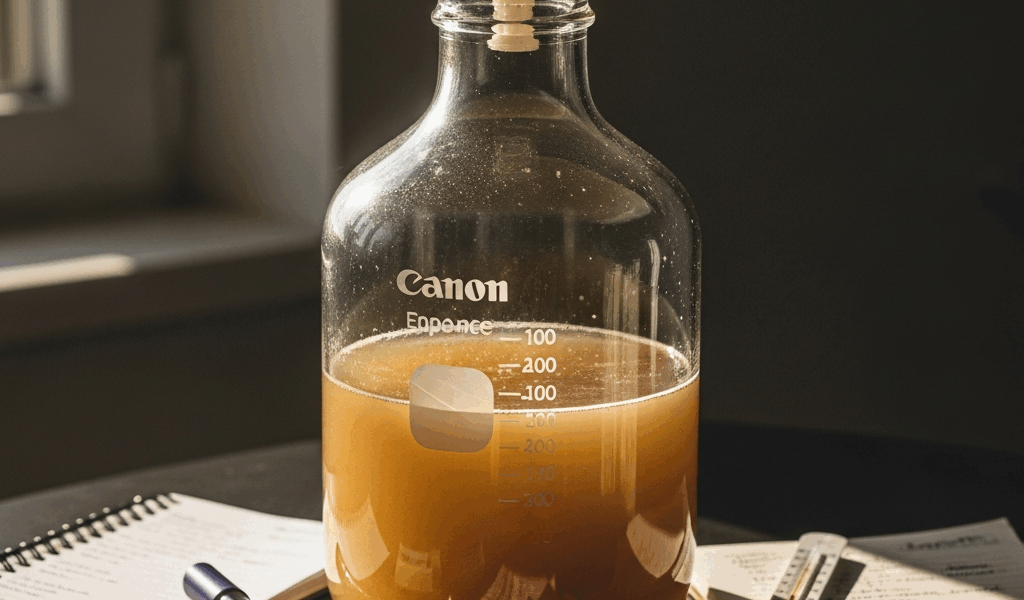
I’ve killed more wine batches than I’d like to admit by panicking too early. Convinced the fermentation had stalled, I’d scramble through three different yeast restarts when honestly, the batch just needed another week at cooler temperatures. The difference between truly stuck fermentation and slow fermentation comes down to one measurement: specific gravity readings taken three days apart.
Here’s the rule I now follow religiously. Take a hydrometer reading today. Write it down. Wait exactly three days without touching anything. Take another reading. If the gravity dropped by 0.005 or more—say, from 1.090 to 1.085—fermentation is happening. It’s slow, maybe painfully slow, but it’s happening. You’re not stuck.
Stuck fermentation means your gravity hasn’t changed in seven to ten days despite the yeast being viable. No airlock activity for a week. No signs of life whatsoever. That’s the actual problem.
The timeline matters, though. Fermentation speed varies wildly depending on temperature, yeast strain, and sugar content. I’ve had apple wines sit dormant for two weeks at 58°F before suddenly exploding with activity. That wasn’t stuck. That was a patient yeast, and I learned to be patient with it.
Observable signs of actual stuck fermentation include a completely silent airlock for more than a week, a gravity reading that doesn’t budge across multiple measurements, and visible yeast settlement on the bottom with no gas production. The must smells off—vinegary or sulfurous—rather than like active fermentation, which has that pleasant yeasty, slightly fruity smell.
Airlock activity alone is meaningless, honestly. CO₂ can bubble up from nowhere if you’ve got pressure changes in your room. I once thought my batch was fermenting brilliantly only to discover the dog had bumped the carboy, causing a temperature spike that pushed trapped gas out. The hydrometer doesn’t lie. The airlock? That lies constantly.
Check These 5 Things Before You Restart
Before you pitch new yeast or spend money on additives, work through this checklist. Most “stuck” fermentations are actually one of these five problems hiding in plain sight.
- Temperature below 60°F or above 85°F — Yeast basically hibernates below 60°F and dies above 85°F. I stored a batch in an unheated garage in October. The gravity hadn’t moved in a week. I was certain it was stuck. Moving it indoors to 68°F restarted fermentation within 48 hours. No yeast addition needed. What a waste that would have been.
- Gravity already at 0.998 or lower — Fermentation isn’t stuck if the yeast has already eaten all the sugar. Your wine is dry. This is success, not failure. I’ve seen people panic about “stuck” fermentations that were actually finished at 0.995 specific gravity. All the yeast had done its job. The batch just needed clearing and aging.
- Headspace or oxidation exposure — If your carboy isn’t sealed properly or you’ve left it open to air for more than a few hours, the yeast colony dies. Oxygen exposure kills most wine yeasts within hours. Check your bung or airlock seal. If it’s loose, that’s your culprit, not fermentation stall.
- Nutrient depletion — This is real but rare in wine. You’ll see signs: fermentation started strong then petered out after a few days. The gravity plateau happens early. Fresh fruit juice usually has enough nutrients. Concentrate or honey-based must? Nutrient deficiency is possible there. The fix is easy.
- Chemical contamination or excess sulfites — If you added sulfites before inoculation and didn’t wait 24 hours, you might have killed the yeast culture. Excess SO₂ (more than 100ppm in your must) will stall fermentation. Less common with homemaking but worth checking if you’ve added preservatives.
Probably should have opened with this section, honestly. Most stuck fermentations don’t exist. You’re 80% likely to find the problem in this checklist.
Gentle Restart Method for Cold or Sluggish Batches
Rehydration is your first real intervention. If temperature is the culprit, this solves it. If nutrient deficiency is the issue, this buys you time.
Here’s exactly what I do. Pull out a small glass and heat some filtered water or juice to 104°F (40°C)—warm to the touch but not hot. I use a thermometer. Never guess. Guessing gets you dead yeast.
Add your yeast to the warm liquid. Same strain if possible, or a neutral wine yeast like EC-1118. Don’t use a full pitch yet. Use about 25% of a packet, maybe 2 grams if you’re weighing. Let it sit for fifteen minutes. You’re not trying to start fermentation yet. You’re waking up dormant cells.
Add an equal volume of your must to the yeast suspension. Do this slowly, over five minutes, stirring gently. This acclimates the yeast to your batch’s alcohol content and acid level. Skip this step and you shock the rehydrated cells back to sleep. I learned that the hard way with a cider that cost me four days of waiting.
Wait another fifteen minutes. Then pour the whole mixture back into your carboy and stir gently for thirty seconds. Let it rest.
Activity typically resumes within twelve to forty-eight hours if the batch is salvageable. You should see bubbling in the airlock within twenty-four hours. Gravity should drop noticeably within forty-eight hours.
Add yeast nutrient—DAP (diammonium phosphate) or a complete nutrient blend like Fermaid K—only if you suspect nutrient deficiency. Dosing is critical. Most nutrient packets tell you the amount per gallon. An overdose of DAP can make your wine taste like cabbage. Fermaid K is more forgiving.
Temperature control during restart is essential. Keep the carboy at 65–72°F (18–22°C) if possible. Warmer speeds things up; cooler slows them down. Don’t overshoot. A batch restarted at 75°F ferments faster but produces off-flavors. Learn that once and you remember it forever.
Full Yeast Restart When Nothing Else Works
Sometimes your batch is genuinely dead. The yeast is gone. Fermentation won’t restart even after rehydration and temperature adjustment. At this point, you have two choices: salvage or abandon.
Salvaging means introducing a new yeast colony. This works maybe seventy percent of the time. The risk is that whatever killed the first yeast kills the second one too. If your batch has contaminating bacteria—unlikely but possible—adding new yeast feeds the problem.
Before you restart, taste the batch. Seriously. If it tastes fine and fermentation just stopped early—gravity at 1.010 or higher with active yeast still viable—salvaging makes sense. If it tastes vinegary or off, the batch is contaminated. Accept the loss. Pouring it out is cheaper than spending two months nursing a dying batch.
If you proceed with full restart, choose a yeast strain carefully. EC-1118 (Prise de Mousse) is the nuclear option—it ferments in cold, finishes dry, and tolerates abuse. Red Star Premier Blanc works similarly. High-alcohol batches or stuck fermentations at high gravity (above 1.050)? These strains push through.
Prepare a proper starter. Rehydrate the yeast in small volume exactly like the gentle method, but use a full packet this time. Let it build for two to four hours. You’ll see visible bubbling. Then acclimate it to your must over thirty minutes. Pour it in. Seal it up.
Expect activity within twenty-four hours or assume it’s dead. Don’t restart the restart. If yeast won’t take hold on the second attempt, the batch is likely contaminated or the must has properties hostile to fermentation. Your time is worth more than the wine at this point.
Prevent Stuck Fermentation Next Batch
Prevention costs almost nothing. It’s temperature control, yeast selection, and monitoring discipline.
Temperature consistency is the single biggest variable. Fermentation that starts at 70°F should stay near 70°F throughout. Temperature swings of ten degrees or more slow yeast dramatically. I use a heating belt ($30–50 on Amazon) in winter and keep winter batches in an insulated box with a blanket. Sounds silly. It works.
Choose yeast for your climate. High-alcohol wines in warm climates should use temperature-tolerant strains. Cool climates benefit from strains that work at lower temperatures. Read the yeast packet. Temperature range is everything.
Start with adequate nutrients. For fruit wines, you’re usually fine with natural nutrients in the fruit. For concentrate or honey, add nutrients from day one. Use yeast energizer (contains vitamins and minerals) and nutrient (contains nitrogen). Split the dose: half at start, half at the quarter-gravity mark when the gravity has dropped by one-quarter of its original range.
Monitor actively. Take gravity readings every three days for the first month, then weekly. Plot them. You’ll see fermentation trajectory immediately and catch slowdowns before they become stalls. A hydrometer costs eight dollars and eliminates ninety percent of stuck fermentation panic.
Use proper sanitation on all equipment. Contamination is rare in wine but deadly when it happens. Wash everything with hot water and a brush, then sanitize with sulfites or StarSan. Contaminated batches are the ones that don’t restart. Clean gear prevents it.
This time around, you’ll know exactly what’s happening in your carboy.



Stay in the loop
Get the latest winemaker's friend updates delivered to your inbox.