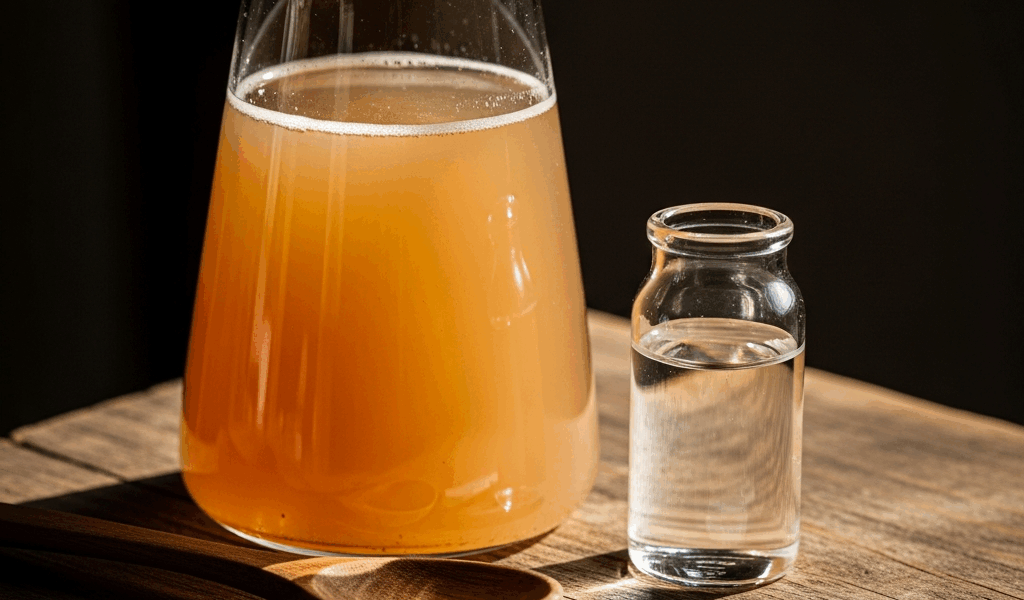
How to Tell If It Has Actually Turned to Vinegar
Home winemaking has gotten complicated with all the conflicting advice flying around about spoilage, salvage, and when to just give up. ”
The worst moment is always the same. You crack open the carboy, something hits your nose wrong, and your stomach drops. Here’s the thing — a funky smell isn’t automatically a death sentence. Vinegar is.
So here’s the test I use. Open the vessel and take a real smell. Not a cautious little sniff. Get your nose over the opening and actually inhale. Early spoilage smells like wet dog, musty basement, burnt rubber — unpleasant, sure, but recognizable as something gone wrong. Vinegar smells like vinegar. Sharp. Acidic. Unmistakable. There’s genuinely no middle ground once acetobacter has had a few weeks to run wild.
Now taste it. Small sip, hold it three seconds. Still sour but wine-like? Salvageable. Does it taste like someone poured Bragg’s apple cider vinegar directly onto your tongue? That’s conversion. You’ll know.
If you want a number to go with your gut feeling, grab pH strips from Amazon — about $6–$8 for a pack of 100. Wine sits at roughly 3.2–3.8 pH. Vinegar lands at 2.4–3.4 and hits aggressively. A reading below 3.0 paired with that sharp bite tells you everything you need to know. A titration kit runs $20–$30 and gives you total acidity as a percentage — more precise, honestly — but the taste test works fine for home use. Don’t overthink it.
What Actually Causes Wine to Turn to Vinegar
But what is acetobacter, exactly? In essence, it’s a bacteria that converts ethanol into acetic acid using oxygen as fuel. But it’s much more than that — it’s the thing quietly dismantling your batch while you’re not looking.
It needs two things: oxygen and warmth. Neither one is a mystery. They’re usually self-inflicted.
Loose airlocks are the number one culprit. I learned this the hard way — my S-bend airlock dried out during a particularly brutal July, and oxidation crept in over two solid weeks before I noticed. The airlock looked completely fine until it absolutely wasn’t. That’s what makes this problem so maddening to us home winemakers. Topping-up failures run a close second. Leave a half-inch of headspace instead of filling to the neck, and you’ve handed bacteria a comfortable place to set up shop. Unsanitary equipment matters too, though honestly less than people assume. One contaminated siphon — or a hydrometer you forgot to rinse — can introduce the bacteria without any obvious warning sign.
Temperature amplifies everything. Wine sitting in a 75°F basement converts faster than wine in a 55°F cellar. Add oxygen to warmth and acetobacter moves quickly. Don’t make my mistake of assuming the basement stays cool in summer.
Is There Any Way to Save It
Let’s be direct: if it tastes like vinegar, it’s not becoming wine again. Don’t spend time or money chasing that outcome. That’s just the truth.
But if you caught it early — smells off, still mostly tastes like wine — you have real options. So, without further ado, let’s dive in.
Remove headspace immediately. First move. Visible airspace above the wine in a carboy means trouble. Rack it into a smaller vessel or top it up with a neutral wine of similar type. Don’t use water. Use actual wine or a commercial top-up product — Carboy Caps work well for this.
Add potassium metabisulfite. Campden tablets or powder, either works. Sulfite binds with acetaldehyde — the compound acetobacter produces as it converts your wine — and slows or stops further damage. It won’t reverse what’s already happened. For a 5-gallon carboy, dissolve 1/4 teaspoon of potassium metabisulfite powder in a little water, then stir it thoroughly into the wine. Using Campden tablets instead? One tablet per gallon, so five tablets for five gallons. Crush them first, let the powder dissolve over about an hour.
Wait 24 hours. Smell it again. The sulfite smell will be sharp and chemical — don’t confuse that for the vinegar smell. They’re different.
Move it to cold storage. Acetobacter slows dramatically below 55°F. Basement, crawl space, spare fridge — wherever you’ve got consistent cool. Temperature stability matters more than absolute cold. A consistent 50°F beats a fluctuating 45–65°F every single time.
Probably should have opened with this section, honestly. But these steps are triage, not resurrection. They buy time and can genuinely salvage early-stage spoilage. They don’t bring back a batch that’s fully converted.
What to Do With Wine That Cannot Be Saved
This is where most winemaking articles leave you hanging. “Sorry, it’s vinegar now. Better luck next time.” Not helpful when you’re staring at four gallons of the stuff.
Your best option — finish the conversion intentionally and make your own wine vinegar. I’m apparently someone who gets weirdly invested in not wasting anything, and homemade wine vinegar works for me while store-bought versions never quite deliver the same depth. Pour the wine into wide, shallow vessels. I use a 2-quart glass Pyrex bowl — nothing fancy. Cover it with cheesecloth to block dust and bugs while still allowing oxygen flow. Store it at 60–75°F. In 4–12 weeks, depending on temperature, you’ll have functional vinegar with genuine complexity. Strain it, bottle it, use it for cooking, salad dressings, pickling. A 4-gallon batch converts down to roughly one usable gallon. That’s real value from a batch you thought was dead.
If vinegar-making doesn’t appeal to you, the wine still has uses. A gallon of failed wine makes a solid cooking base — pan reductions, braising liquids for beef or pork, fruit marinades. The acidity actually works in your favor here. Use it straight or cut it with water depending on how far along the conversion went.
It also works as a cleaning rinse for winemaking equipment. Acidity cuts mineral deposits and sanitizes surfaces. Old batches make a solid final rinse for carboys before storage. I’ve been doing this for years and the carboys come out clean.
How to Make Sure This Never Happens Again
Prevented problems are better than salvaged ones. While you won’t need a professional winery setup, you will need a handful of consistent habits. Here’s my checklist after every batch.
- Check your airlock weekly during the first three months. Refill S-bend airlocks with water or vodka — either works. A dried-out airlock is worthless. I set a phone reminder for Sunday evenings. Takes 30 seconds.
- Top up consistently at every racking. Fill to within a half-inch of the bung. No exceptions. I keep a bottle of neutral white wine on hand specifically for topping up. Not for drinking — for the carboy.
- Sanitize everything. Star San — about $12 per gallon of concentrate — takes 30 seconds and covers all equipment. I soak siphons and hydrometers for at least five minutes before use. Every single time.
- Add sulfites at racking. A quarter teaspoon of potassium metabisulfite per 5 gallons at every racking step. Preventive maintenance, not emergency repair. Huge difference.
- Store in cool, stable temperatures. Below 65°F is ideal. Above 75°F accelerates everything you don’t want accelerated.
These habits aren’t glamorous. None of this is a sexy winemaking technique. It’s just the difference between a cellar full of good wine and a cellar full of vinegar — and I know which one I’d rather explain to guests.


Stay in the loop
Get the latest winemaker's friend updates delivered to your inbox.