Why Is Your Wine Still Sweet After Fermentation
Homemade winemaking has gotten complicated with all the conflicting advice flying around.
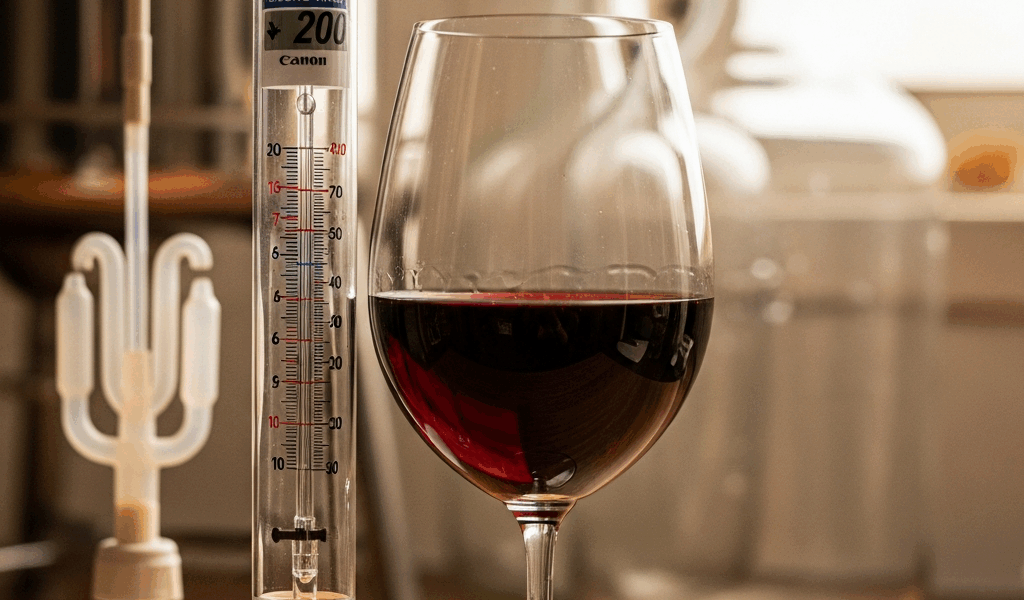
So your wine came out tasting like syrup. Before you touch anything — and I mean anything — grab a hydrometer. Not a guess. Not a finger-dip taste test. A hydrometer. That single tool will tell you which of three completely different problems you’re actually dealing with.
Because here’s the thing: stuck fermentation, a back-sweetening miscalculation, and a flavor balance problem all taste identical in the glass. They are not the same problem. The fixes are totally different. Use the wrong one and you’ve wasted your batch.
I made a blackberry wine about five years back that tasted like liquid candy at day 45. Panicked. Pitched fresh yeast three separate times — spent probably $18 in yeast packets alone. Turned out fermentation had finished completely. The real culprit was acidity so low my palate couldn’t separate actual sweetness from flavor chaos. Two hours after adding tartaric acid, the wine tasted like wine. Don’t make my mistake.
So, without further ado, let’s dive in.
Check Your Hydrometer First — Here Is What the Numbers Mean
A hydrometer runs $8 to $15. Harbor Freight carries them. Every homebrew shop carries them. Get one before you do anything else.
Pull a fresh sample — room temperature, not straight from a cold corner of your basement. Float the hydrometer and read where the liquid surface crosses the scale. That number is your specific gravity, or SG. Write it down.
- SG above 1.005 — Fermentation stalled. Yeast quit before converting all the sugar. Classic stuck fermentation.
- SG at or below 1.000 to 0.990 — Fermentation finished. The sweetness is either intentional back-sweetening that went too far, or a flavor balance issue wearing a sweetness costume.
- Target for dry wine — Somewhere between 0.990 and 0.998. Drop below 0.990 and you’re in bone-dry territory, which has its own problems.
That one number decides your entire next move. High SG? Jump straight to the stuck fermentation section below. Low or terminal SG? The flavor balance fix is your answer. Don’t skip this step hoping instinct will carry you. It won’t — I’ve tested that theory personally.
How to Fix a Wine That Stopped Fermenting Too Sweet
Stuck fermentation is basically yeast falling asleep on the job. Temperature crashes, nutrient depletion, a weak starter culture — those are the usual suspects.
Step one: check your temperature. Yeast below 60°F essentially hibernates. If your carboy is sitting in a cold garage or unheated basement, move it somewhere between 65°F and 72°F. Wait 48 hours. Take another SG reading. Sometimes that’s genuinely all it takes — and it’s a little embarrassing when it is.
Step two: feed the yeast. Yeast nutrient — I use Lalvin’s DAP blend, about $4 a bag — gives dormant cells the nitrogen and minerals they need to restart. Add per package directions, stir gently to rouse the lees sitting at the bottom, and let it rest another week.
Step three: pitch a fresh culture if nothing moves. Don’t sprinkle dry yeast directly into the carboy like you’re seasoning pasta. That fails constantly. Make a starter instead: rehydrate EC-1118 yeast in warm water around 104°F, let it foam for 30 minutes, stir it into about a cup of your stuck wine, wait 4 hours for visible activity, then pour the whole starter into the carboy. EC-1118 — sometimes called Champagne yeast — is roughly $5 a packet and it is an absolute workhorse. It will finish fermentations that every other strain abandoned.
Give it two full weeks. Check gravity again.
SG dropping and airlock bubbling? You’re winning. If nothing changes after two weeks of the starter method, accept that the wine won’t ferment further and head to the back-sweetening section. Some batches just tap out — that’s winemaking.
Fixing Wine That Fermented Dry But Still Tastes Too Sweet
Probably should have opened with this section, honestly. It’s more common than stuck fermentation and almost every article skips it entirely.
But what is a flavor balance problem? In essence, it’s when acid and tannin — the structural elements that make wine taste like wine instead of juice — are missing or too faint. But it’s much more than that. Sugar doesn’t taste the same in isolation as it does when it’s surrounded by bright acidity and mild bitterness. Pull those elements out and the exact same sugar level tastes cloying, heavy, almost medicinal.
Think about orange juice versus orange juice with a pinch of salt and a squeeze of lemon. Same sweetness. Completely different experience on your palate. “
Your hydrometer reads 0.995 or lower. Fermentation is done. Here’s what to do.
Fix one: add acid. Tartaric acid might be the best option, as fruit wine especially requires structural acidity. That is because fruit musts often lack the natural tartaric content that wine grapes carry. Dissolve 1/4 teaspoon in 2 tablespoons of wine, stir it into your carboy, wait 24 hours, taste. Repeat in 1/4-teaspoon increments. A digital pH meter — the Apera PH20 runs about $35 on Amazon — will tell you when you’ve hit the 3.2 to 3.6 range that makes wine taste crisp instead of puckering.
Fix two: add tannin. Oak powder, food-grade grape tannin, or even 1/4 cup of very strong brewed black tea per gallon can shift perception away from sweetness. Start with 1/8 teaspoon of tannin powder per gallon. Taste in 48 hours. You’re not trying to make the wine taste tannic — you want grip, not bitterness.
I’m apparently a low-acid winemaker by instinct and tartaric acid works for me while citric acid never quite integrates the same way. Your results may vary. Start small either way.
When to Accept It and How to Back-Sweeten Intentionally
Sometimes the wine won’t ferment further and dry simply isn’t going to happen. That’s fine — off-dry wines are legitimate and honestly underrated in home winemaking circles.
First, stabilize. Mix potassium sorbate and potassium metabisulfite per package directions and add both to the carboy. Wait one full week. This step matters — skip it and the yeast will wake up and ferment your added sugar straight into more alcohol, which is not what you wanted.
Then back-sweeten with simple syrup — equal parts sugar and water, heated until clear and cooled completely — or with unfermented grape concentrate. Add it slowly, taste after each addition. Most wines land in a good place somewhere between 1 and 3 tablespoons of simple syrup per gallon. That’s roughly 1 to 3 percent residual sugar.
Let the stabilized wine sit another week. No bubbling, no activity? You’re done. Bottle it.
Hitting a sweet-wine problem at some point is basically a winemaking rite of passage. Everyone does it. The hydrometer is your actual answer — the fix just follows from whatever the numbers say.


Stay in the loop
Get the latest winemaker's friend updates delivered to your inbox.