Secondary Fermentation Explained — When to Rack and How Long to Wait
Secondary fermentation has gotten complicated with all the conflicting noise flying around — forums saying two weeks is fine, YouTube videos rushing to bottling day, kit instructions that seem written for someone with zero patience. The batch was cloudy and sharp, tasted like it resented me personally, and I spent Thanksgiving quietly steering guests away from second pours. That mistake ran me about $40 in supplies. I’ve slowed down considerably since then.
This article includes affiliate links. We may earn a commission at no extra cost to you.
This guide covers the decisions that actually matter during secondary — what’s happening inside that carboy, how to read when your wine is ready, and what to do when things go sideways.
What Secondary Fermentation Actually Does
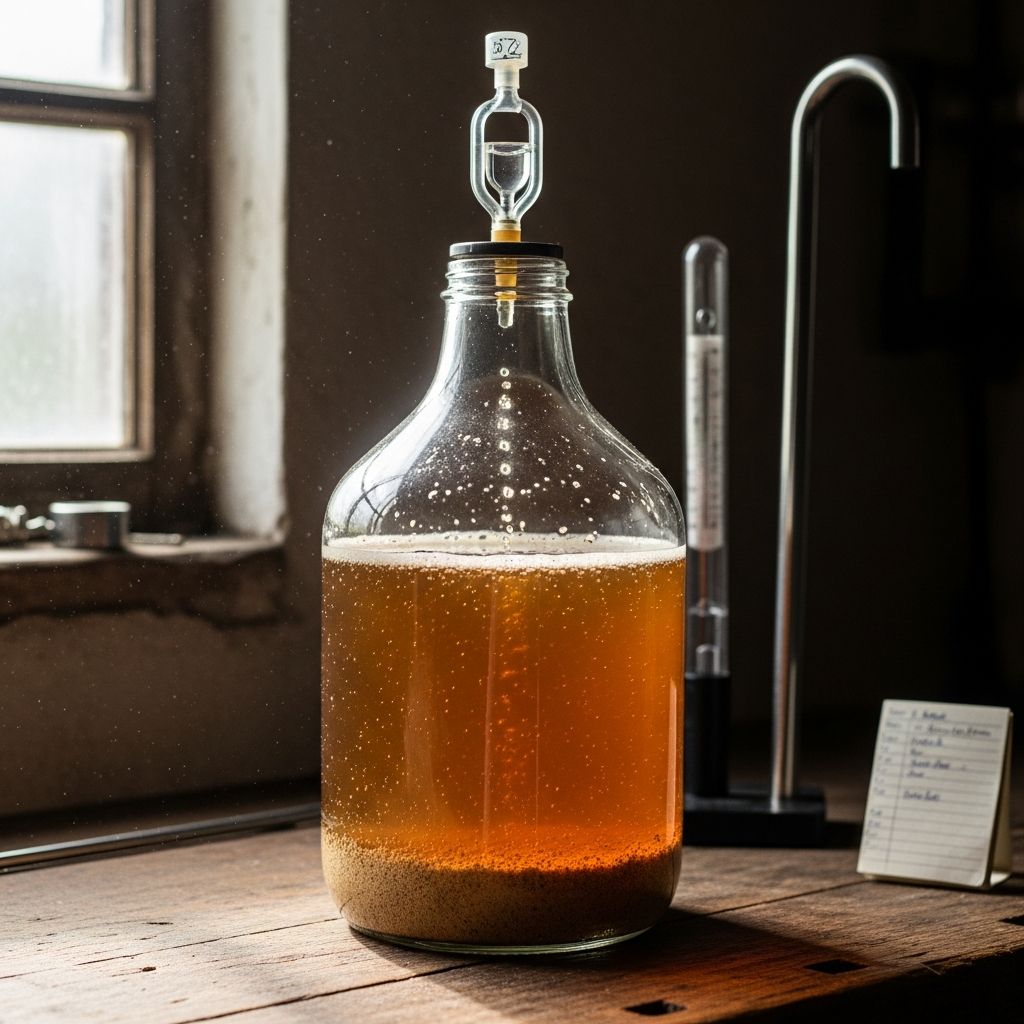
Secondary fermentation is quieter than primary. A lot quieter. Primary is chaotic — foamy, almost aggressive in its activity. Secondary is slow and steady, and that shift is entirely the point.
But what is secondary fermentation, really? In essence, it’s the phase where yeast finishes consuming residual sugars at a much slower pace while the wine begins to settle and clarify. But it’s much more than that.
Three things happen here that simply cannot be rushed.
First, clarification. Gross lees — grape solids, dead yeast cells, tartrate crystals — drop out of suspension during this phase. Leave the wine on them too long and you get off-flavors. Pull the wine too early and it never fully clears. There’s a real window, and learning to spot it takes a few batches.
Second, off-gassing. Dissolved CO2 needs somewhere to go. Wine carrying too much of it tastes harsh and prickly — not the good kind of carbonation, just an uncomfortable bite that’s especially obvious in reds. Full off-gassing at room temperature takes weeks. I occasionally use a Fizz-X wand attached to a drill on its lowest setting to move things along before bottling. Probably saves me a couple of weeks of waiting.
Third, flavor development. Secondary is where the wine stops tasting like fermentation and starts tasting like wine. Fruit rounds out. Tannins soften. None of that happens in seven days — it needs time and a stable, cool environment, ideally somewhere between 60°F and 70°F.
Shortcutting secondary doesn’t save time. It just borrows that time from the final product, and the final product pays it back with interest.
When to Rack From Primary to Secondary
The biggest mistake I see beginners make — honestly, the one I made too — is using bubble activity to decide when to rack. Bubbles lie. An airlock slows down for all kinds of reasons: a temperature dip, a slightly better seal, normal variation in yeast behavior. Fewer bubbles doesn’t mean fermentation has reached the right stage for transfer.
Use a hydrometer. Every single time. That’s it.
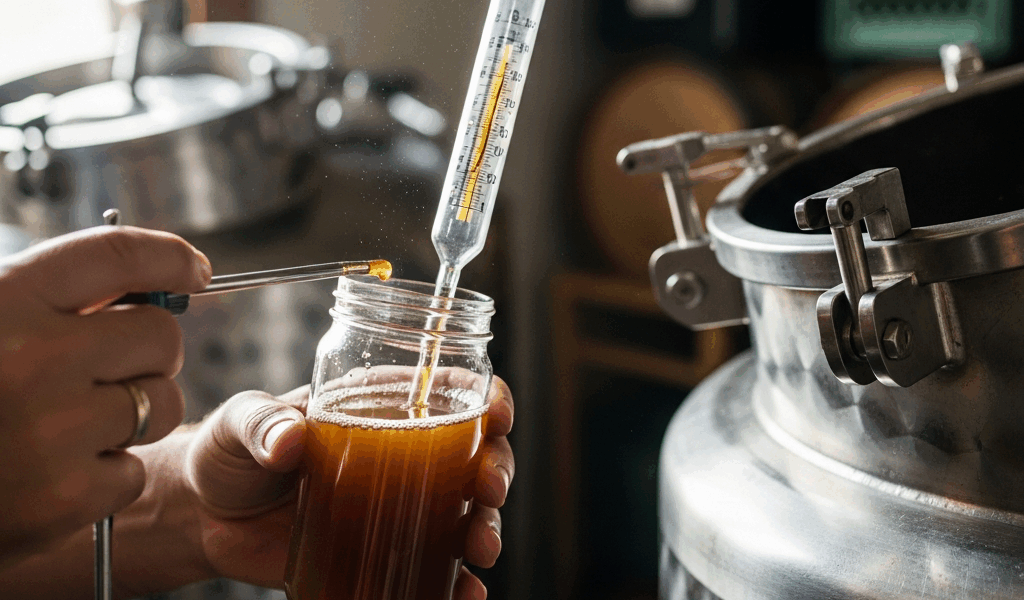
For reds, rack when specific gravity (SG) sits between 1.010 and 1.020. Not 1.000 — that’s too late. You want a little fermentation still happening when you move the wine, because the continued CO2 production in the new vessel acts as a natural buffer against oxidation while things settle. My go-to is a basic glass hydrometer from MoreWine!, about $8, four years old, still going strong.
Whites take longer to reach that same target range — typically 10 to 14 days versus 5 to 7 for most reds. Yeast strain, temperature, and the sugar content of your must all push those numbers around a bit. But as a starting point, it holds up across most kits and fresh grape batches.
Here’s a practical checklist for racking readiness:
- Hydrometer reads between 1.010 and 1.020
- Vigorous bubbling has clearly slowed — not stopped, just slowed
- A visible layer of lees has formed at the bottom of your primary fermenter
- The wine has begun to show some clarity near the surface
Hit all four? Rack. Still reading 1.030 or above? Wait another 24 to 48 hours and check again.
How Long Secondary Takes
Probably should have opened with this section, honestly, because it’s the question I get asked more than anything else: how long does it actually stay in there?
The minimum is 2 to 4 weeks. That’s the floor — not the target. Two weeks gives you something that’s technically done fermenting but hasn’t had the time to develop or clarify properly. Four weeks is better. Two to three months is where most wines actually find themselves.
Here’s how you know secondary is complete — not probably complete, actually complete:
- Specific gravity reads 0.998 or below on three consecutive measurements taken 24 hours apart
- The airlock shows no bubbles for 60 seconds or more when you watch it
- The wine is visually clearer than it was two weeks ago
Three consecutive stable readings. That’s the standard. One reading at 0.998 means nothing on its own — could be a temporary lull. Three in a row says fermentation is genuinely finished.
Temperature affects everything here. My basement sits around 62°F in winter — secondary down there can stretch to three full months for a Cabernet Sauvignon. Same wine in my kitchen at 68°F finishes in six to eight weeks. Neither is wrong. Cooler secondary fermentation often produces a slightly more refined result, though the difference at the home scale is subtle enough that I wouldn’t lose sleep over it.
Don’t rush this phase. The wine is doing real work. Your job is mostly to stay out of the way and take readings every week or two.
Common Secondary Fermentation Problems
Three problems come up again and again. Each one has a specific fix.
Stuck Fermentation
Stuck fermentation means your SG stopped dropping before it should have — sitting at 1.010 for two weeks without moving, for example. Common causes are temperatures below 60°F, nitrogen deficiency in the must, or yeast that got stressed out during primary.
First, you should move the carboy somewhere warmer — at least if you haven’t already tried that. 65°F to 70°F is the sweet spot for restarting. If warming it doesn’t help within 48 hours, make a starter with a fresh packet of EC-1118 champagne yeast and pitch it directly into the carboy. EC-1118 might be the best option here, as stuck fermentation requires a hardy, stress-tolerant strain. That is because EC-1118 survives high-alcohol environments that would knock out most other yeasts. Most homebrew shops carry it for $1.50 to $2.00 a packet.
Hydrogen Sulfide — The Rotten Egg Problem
If the carboy smells like rotten eggs or struck match, that’s hydrogen sulfide — a sign of stressed yeast, usually from nutrient deficiency or heat exposure during fermentation. Don’t make my mistake of waiting to see if it goes away on its own. It doesn’t.
Caught early, it’s fixable. Rack the wine off the lees immediately and add a measured dose of Fermaid-K or DAP (diammonium phosphate) — dosing based on your volume, per the manufacturer’s instructions. Splashing during the rack helps drive off some of the gas. If the smell sticks around after two racks and nutrient additions, copper fining is next — a copper mesh or short section of copper pipe stirred briefly through the wine reacts with and pulls out hydrogen sulfide. I’ve used a small copper plumbing fitting from the hardware store in a pinch. Worked fine.
Oxidation from Headspace
Oxidation happens when there’s too much air space at the top of the secondary vessel. The wine turns brownish, drops its fruit character, and picks up a flat, nutty smell. Prevention is simple: keep the carboy topped up with no more than an inch or two of headspace below the neck. Use the same variety of wine if you have it, or water with a small addition of potassium metabisulfite.
Once oxidation sets in, it’s very hard to reverse. Sulfite additions and ascorbic acid can partially soften it, but honestly, prevention is the only answer that actually works.
Racking Schedule — How Many Times and When
Frustrated by the wildly inconsistent advice I kept finding online, I eventually landed on a three-rack schedule that’s worked reliably across about a dozen batches. Here’s how it breaks down.
First Rack — Primary to Secondary
This is the transfer described above. Happens somewhere between day 5 and day 14 depending on wine type and fermentation pace. Move the wine when SG hits 1.010 to 1.020, using a sanitized siphon. Minimize splashing — a small amount of oxygen is fine here since the wine is still fermenting and generating CO2, but there’s no reason to aerate aggressively.
Second Rack — Off the Fine Lees
Four to six weeks after the first rack, a thin layer of fine lees — more compact and chalky-looking than the gross lees from primary — will have settled at the bottom of the carboy. Rack off this layer into a clean, sanitized vessel. Add potassium metabisulfite here if you haven’t yet — 1/4 teaspoon per 6-gallon batch as a standard protective dose.
This rack matters more than people give it credit for. Fine lees left too long contribute off-flavors, and the slightly anaerobic environment at the very bottom of the vessel can quietly encourage hydrogen sulfide production.
Third Rack — Pre-Bottling Clarification
Optional, but worth doing for wines that haven’t fully clarified. This happens roughly 8 to 12 weeks after the second rack, shortly before bottling — a final chance to move the wine away from any remaining sediment and take one last look at clarity. Still hazy? This is the moment to add fining agents like Bentonite or Sparkolloid before you commit to bottles.
One caution: don’t over-rack. Every transfer exposes the wine to some oxygen and some risk. Three racks across the full secondary period is appropriate. If you’re racking every two weeks because you’re anxious, you’re creating problems rather than solving them. Rack with purpose — not out of nervousness.
Secondary fermentation rewards patience more than almost anything else in winemaking. Check your readings, keep the carboy topped up, hold a stable temperature, and then genuinely leave the wine alone. The difference between something you bottled in a rush and something you gave three months to develop is unmistakable the moment it hits the glass.

Stay in the loop
Get the latest winemaker's friend updates delivered to your inbox.