Homemade Wine Too Sweet — How to Fix It Without Starting Over
Homemade wine has gotten complicated with all the conflicting advice flying around. Add more yeast. Blend it out. Just give up and make vinegar. I’ve rescued at least seven batches that turned out too sweet — and what I learned from batch three saved me thousands of dollars and a lot of embarrassment. The problem you’re staring at probably isn’t what you think it is.
As someone who has been fermenting wine in a cramped spare bedroom since 2017, I learned everything there is to know about diagnosing over-sweetness the hard way. Today, I will share it all with you.
What’s missing from most forum advice is the fundamental question: Why is your wine sweet in the first place? That answer determines everything. Not academic theory. Not textbook winemaking. What actually works when you’re standing in front of a carboy that tastes like dessert and you’re deciding whether to salvage it or dump it.
First — Diagnose the Problem
But what is a hydrometer reading, really? In essence, it’s a density measurement that tells you how much sugar is still dissolved in your wine. But it’s much more than that — it’s the difference between fixing the right problem and making everything worse.
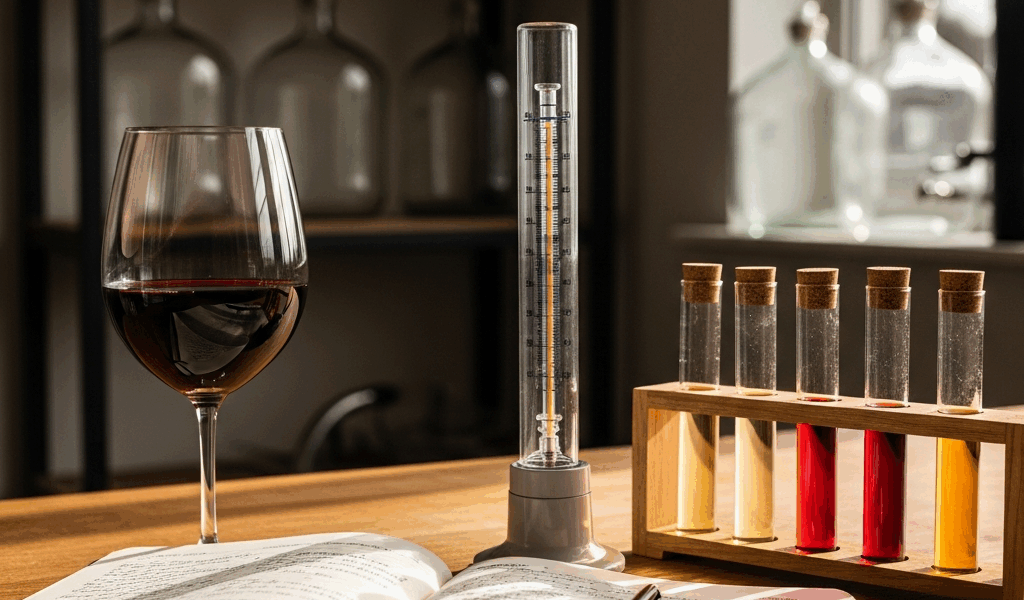
Get a hydrometer before you do anything else. Non-negotiable. I use a basic glass model from Northern Brewer — $8, been floating in my test tube for six years. It measures specific gravity, which is the density of dissolved sugar compared to plain water.
Here’s what you need to know:
- Specific gravity of 1.000 or below = fermentation completed normally
- Specific gravity of 1.005 to 1.010 = semi-sweet wine (intentional or accidental)
- Specific gravity above 1.010 and no back-sweetening = stuck fermentation
- Specific gravity above 1.010 and you added sugar after fermentation = over-sweetening
Take the reading. Write it down. Honestly, this single step separates people who fix their wine from people who wreck it. That’s what makes the hydrometer endearing to us home winemakers — it removes all the guessing.
You Have Stuck Fermentation If
Your hydrometer reads above 1.000, you haven’t added sugar since fermentation started, and the wine tastes sweet. Fermentation didn’t finish. Yeast stopped working while residual sugar was still hanging around.
This happens. I had it hit me with a batch of apple wine in my first year — a five-gallon carboy I’d started in October, sitting in a 58°F garage. I panicked. Tasted it, said “oh no,” and nearly abandoned the whole hobby. Don’t do that. This is fixable.
You Have Over-Sweetening If
Probably should have opened with this section, honestly, because this is the most common thing I see in home winemaking groups. Your hydrometer reads above 1.000, you definitely remember adding sugar or honey after fermentation finished, and you maybe got a little generous with the pour.
Back-sweetening is legitimate. I do it intentionally all the time. But it’s easy to overshoot when you’re tasting instead of measuring — and your palate at 2pm on a Saturday is not a precision instrument.
Stuck Fermentation Fix
So, without further ado, let’s dive in. Stuck fermentation means yeast quit before converting all the sugar to alcohol. Temperature. Nutrient deficiency. pH problems. The exact cause matters less than the fix: restart fermentation.
Step One: Warm Your Wine
Move your carboy somewhere consistently warm. Most wine yeasts want 70–75°F. If your wine is sitting in a 55°F basement, the yeast isn’t dead — it’s dormant. Warmth wakes it back up.
I wrap a heat belt around my carboy — a 25-watt model I grabbed for $22 that plugs into a standard outlet. Tape a stick-on thermometer to the glass so you can monitor it. Don’t let it climb past 80°F. That actually kills yeast, which is the opposite of what you want.
Step Two: Add Yeast Nutrient and Restart
Yeast didn’t stall for no reason. Usually it ran out of nitrogen or micronutrients midway through. Sprinkle yeast nutrient into your wine — I use Wyeast Nutrient Blend, roughly $4 per packet. One teaspoon per gallon is the standard dose. Follow whatever the package says, not whatever a forum post from 2009 recommends.
Now you need fresh yeast. Don’t pitch it straight into the carboy. Don’t make my mistake — that’s exactly how you end up with another stuck batch two weeks later.
Step Three: Pitch Yeast the Right Way — Progressive Doubling
Frustrated by a stuck riesling he couldn’t restart, a winemaker named Mike developed this stepping technique using a couple of small mason jars and thirty years of stubbornness. I helped him save that batch in his garage in Sonoma County. That was 2019. I haven’t lost a stuck fermentation since.
Get Lalvin EC-1118 yeast. It tolerates alcohol up to 18%, ferments reliably at lower temperatures, and doesn’t quit easily. I buy five packets at a time — $12 each — and keep them in the freezer door.
Make a starter:
- Mix one packet of dried yeast with 2 tablespoons of your stuck wine and 2 tablespoons of water in a small glass
- Let it sit for 15 minutes to rehydrate
- Stir in another ¼ cup of the stuck wine
- Wait 30 minutes until you see tiny bubbles forming
- Pour this into a 500 mL jar with 250 mL of your stuck wine
- Aerate by stirring vigorously for 2 minutes
- Wait 4 hours
- Your volume is now roughly 750 mL — pour all of it into the carboy with the rest of your wine
This new idea took off several years later and eventually evolved into the progressive doubling method enthusiasts know and swear by today. You’re gradually acclimating fresh yeast to your stuck wine’s environment — not throwing viable yeast into 5 gallons of half-fermented liquid and hoping for the best.
Within 24–48 hours you should see airlock activity, slight cloudiness, maybe a smell like bread dough. If nothing happens after 72 hours, something else is wrong — pH or alcohol levels that yeast simply can’t overcome. But 80% of the time, this works.
Let it ferment until the specific gravity stops dropping for three consecutive days. Check every other day. When you’re done, you’ll have wine that finished naturally instead of quitting halfway.
Over-Sweetened Wine Fix
You finished fermentation. Wine was dry. Then you back-sweetened it and went too far — now it tastes like dessert when you wanted something light. The fix here has nothing to do with yeast.
Solution One: Blending — The Most Reliable Method
Find a completely dry wine of the same type. Same varietal if possible. The dry wine pulls the sweetness down when you combine them. That’s what makes blending endearing to us home winemakers — it’s intuitive, reversible in small trials, and it doesn’t require any chemistry.
Here’s how to figure out the ratio. Say you have 5 gallons of over-sweet chardonnay reading 1.015 SG. You have 3 gallons of bone-dry chardonnay reading 1.000. Run a bench trial first — in a clear glass, combine 2 ounces of the sweet wine with 2 ounces of the dry wine. Taste it. Closer to what you wanted?
If yes, that’s a 1:1 ratio. Apply it to the full batch: 2.5 gallons sweet, 2.5 gallons dry. Rack them together, let it settle a few days, taste it. I’ve done this four times. It works — at least if you have compatible dry wine sitting around. If you don’t, move on to solution two.
Solution Two: Tartaric Acid — Perception Shift
Sweetness is partly sugar and partly the absence of acid. Adding tartaric acid won’t remove the sugar — but it changes how sweet the wine actually tastes. Balance is the goal, not sourness.
I keep tartaric acid powder on hand — $6 for a bottle that lasts about two years before I need another. Start with ¼ teaspoon per gallon. Dissolve it in a small amount of water, stir it into your sample, wait 24 hours, taste. Most semi-sweet wines sit around pH 3.0–3.3. If yours is at 3.5 or higher, a small acid addition shifts the balance considerably.
I’m apparently sensitive to flabby low-acid wines, and tartaric works for me while citric acid never quite gets the same result. Used it on batch five — a blackberry wine that tasted like jam. Half a teaspoon per gallon of tartaric acid, and suddenly it tasted like an intentional dessert wine instead of a botched one. Not what I originally wanted, but good enough to give away as gifts.
Solution Three: Dilution — Last Resort Only
You can add water. It dilutes the sugar and drops the sweetness — but it also drops alcohol content and flavor intensity. Your wine gets thinner. It tastes watered down, because it is.
While you won’t need to dump the batch entirely, you will need a handful of patience and a firm limit. A 10% water addition — half a gallon to 5 gallons — is the maximum I’d touch. Add slowly. Stir thoroughly. Wait 24 hours before adding more. You can’t undo an overshoot.
Run Bench Trials Before Treating the Whole Batch
Every fix I just described should be tested in a wine glass first. Not in the carboy. Not on a hunch. In a glass.
I didn’t do this on batch two. Added acid directly to 5 gallons without testing first. Made it aggressively tart. Don’t make my mistake — it’s a hard lesson when you’re looking at a ruined five-gallon batch that took three months to ferment.
Preventing It Next Time
Once you’ve fixed a stuck or over-sweetened batch, the question becomes: how do you stop repeating it?
Take Hydrometer Readings and Write Them Down
Record the original gravity at the start. Take readings every few days during active fermentation. When you think it’s done, take readings three days in a row. When the number hasn’t moved, fermentation is finished. That’s the confirmation.
I keep a small spiral notebook — literally the 59-cent kind from a dollar store — and I write down the date, batch name, and specific gravity every single time. Patterns start showing up. You learn what a normal fermentation curve looks like for your setup, your yeast, your basement temperature in November versus July.
Calculate Back-Sweetening by the Numbers
Don’t sweeten by taste. Sweetness is subjective — and your palate changes hour to hour. Tasted before dinner is different from tasted after dessert. That’s how over-sweetening happens.
Use the math instead. The formula: 1.5 ounces of sugar per gallon raises the specific gravity by roughly 0.005. So reaching a target of 1.010 from a dry 1.000 baseline needs 3 ounces of sugar per gallon. For a 5-gallon batch, that’s 15 ounces total. Dissolve it in a small amount of warm wine, stir it into the batch, wait 24 hours, take a reading. You’ll land where you intended.
Use the Chaptalization Math for Dry Wine
First, you should understand the difference between chaptalization and back-sweetening — at least if you want to add alcohol without adding residual sweetness. Chaptalization means adding sugar before or during fermentation so the yeast converts it entirely to alcohol. Nothing sweet left behind.
One pound of sugar dissolved in 5 gallons raises the specific gravity by about 0.019 and produces roughly 1% additional alcohol. So moving from 1.070 to 1.090 means adding approximately 1 pound of sugar. The yeast ferments all of it. Final gravity stays dry.
Restraint matters here. Calculate first, add second. Dumping in sugar and hoping for higher alcohol is how you end up with another stuck fermentation in week two.
When to Accept the Sweetness
Here’s something I wish someone had told me earlier: not every wine is supposed to be bone dry.
I spent my first two years chasing the driest possible result — thought that’s what serious winemaking looked like. I now have bottles of riesling, gewürztraminer, and moscato in my rack that are intentionally semi-sweet, and they’re genuinely good. Better than some of my aggressively dry attempts, honestly.
A specific gravity between 1.010 and 1.020, decent acid balance below pH 3.5, and a wine that tastes good to you? That’s not a mistake. That’s a style choice. The acid matters — it keeps the sweetness from tasting flabby or cloying. Semi-sweet with good acidity reads as intentional. Semi-sweet with low acidity reads as something went wrong.
Before you start pulling out the tartaric acid and running bench trials, ask yourself: does this wine actually taste bad, or does it just taste different from what I expected? Those are different questions — and they have very different answers.
Some of my best batches ended up semi-sweet by accident. Now I get there on purpose.




Stay in the loop
Get the latest winemaker's friend updates delivered to your inbox.