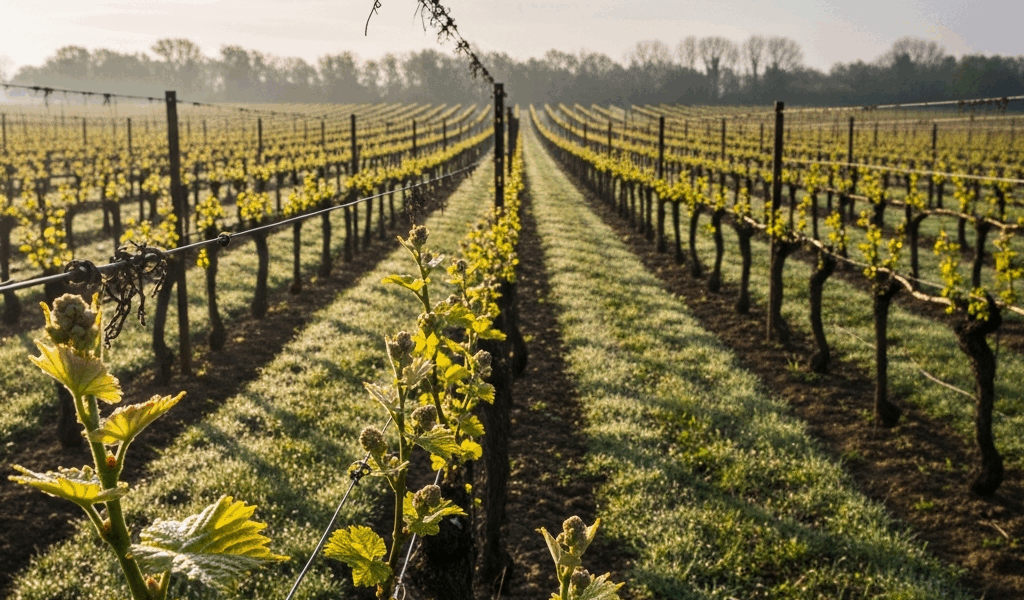
Spring Sets the Stage for the Whole Vintage
What you do in the vineyard between March and June determines more about wine quality than most people realize. Spring is when vines break dormancy, shoot growth explodes, and disease pressure begins. The decisions made now — pruning corrections, canopy management, soil work, and pest control — ripple through harvest and into the bottle.
Assessing Winter Damage
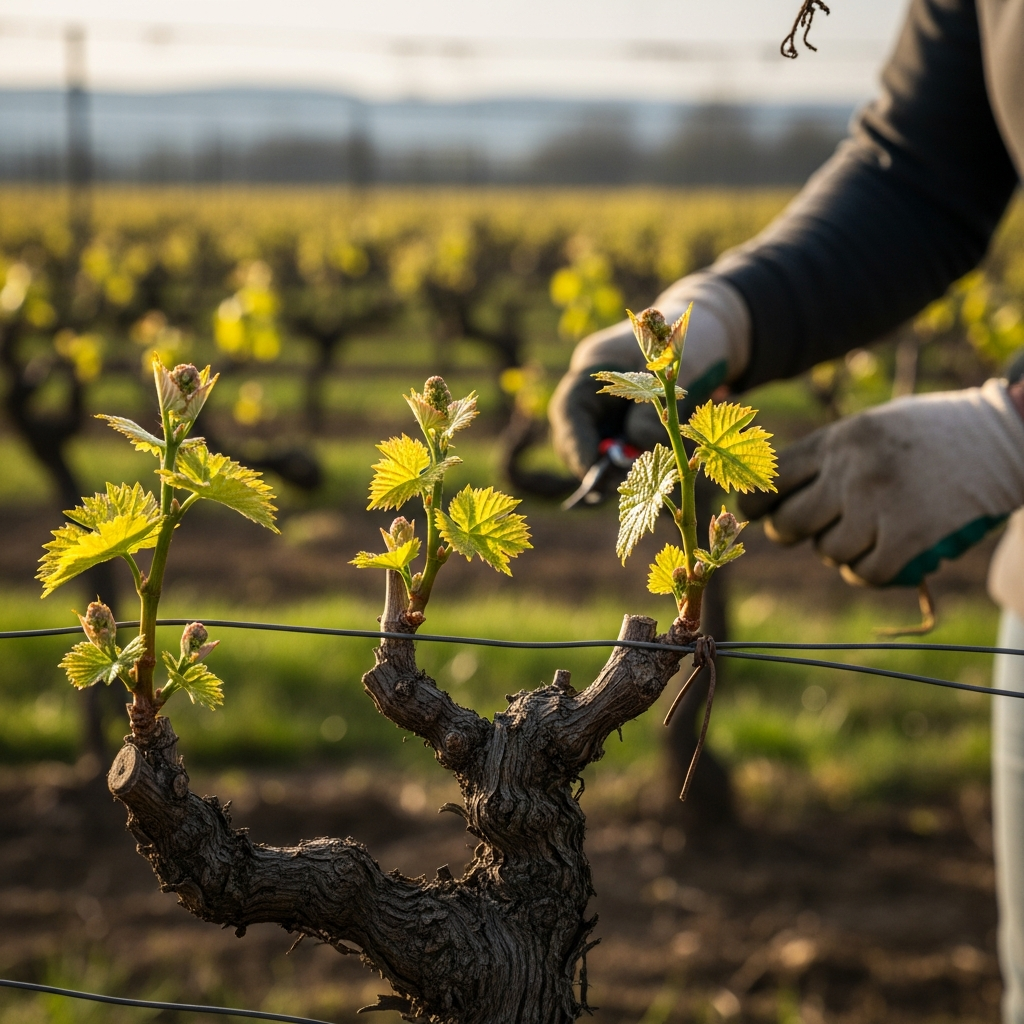
Before anything else, walk every row and check for winter injury. Cane damage from late freezes shows up as brown, dessicated buds that fail to push. If you see significant bud death on your cordons, you may need to adjust your crop expectations for the year and rely on secondary buds, which typically produce smaller clusters.
Check trunk health too. Frost cracks in the bark can harbor disease and attract borers. Young vines are particularly vulnerable — any that didn’t survive winter need to be replaced now while nursery stock is available.
Spring Pruning Cleanup
If you did your major pruning in late winter (as you should), spring is about follow-up. Shoot thinning is critical once buds push and you can see what’s growing. Remove double shoots from single nodes, keeping the stronger of the two. Take out shoots growing from the trunk or below the graft union — these sap energy from the productive canopy.
For spur-pruned varieties, count your shoots per vine and thin to your target. Most quality-focused vineyards aim for 15 to 25 shoots per vine depending on variety and vigor. More shoots means more fruit but less concentration. Fewer means smaller crop with potentially more intensity.
Canopy Management Starts Early
As shoots reach 12 to 18 inches, begin tucking them into your trellis wires. Consistent positioning now prevents a tangled mess later and ensures even sunlight exposure across the fruiting zone. Good air circulation through the canopy is your primary defense against powdery and downy mildew — two diseases that thrive in the warm, humid conditions of late spring.
Remove leaves in the fruiting zone on the east side of north-south rows (or the morning-sun side) once shoots are well established. Early leaf pulling exposes developing clusters to dappled light, which toughens the skins and improves disease resistance. Don’t overdo it in hot climates — sunburn on exposed clusters is just as damaging as mildew on shaded ones.
Soil and Nutrition
Spring soil work depends on your management approach. Cultivated vineyards should be tilled or disced between rows to manage weeds and incorporate any cover crop biomass. If you maintain permanent cover crops, mow them as they begin competing with the vines for water — typically when spring rains taper off.
Soil tests taken in fall should guide your spring fertilization plan. Most established vineyards need modest nitrogen — excessive nitrogen drives vegetative growth at the expense of fruit quality. Potassium and magnesium are common deficiencies in older vineyards. Foliar sprays of micronutrients like boron and zinc can address specific deficiencies more efficiently than soil amendments.
Pest and Disease Monitoring
Begin your spray program before symptoms appear. Preventive fungicide applications at bud break, 6-inch shoot growth, and pre-bloom are the standard timing for mildew-prone varieties like Chardonnay, Pinot Noir, and Riesling. If you farm organically, sulfur and copper-based sprays are your primary tools — apply early and often when conditions favor disease.
Scout for mites, leafhoppers, and vine mealybug. Sticky traps and visual inspection of the undersides of leaves catch infestations early when they’re still manageable without heavy intervention.
The Payoff
Spring vineyard work is relentless, but it’s also when you have the most control over the coming vintage. Get the canopy right, keep disease out, and manage vigor, and you give yourself the best possible fruit to work with come September.




Stay in the loop
Get the latest winemaker's friend updates delivered to your inbox.