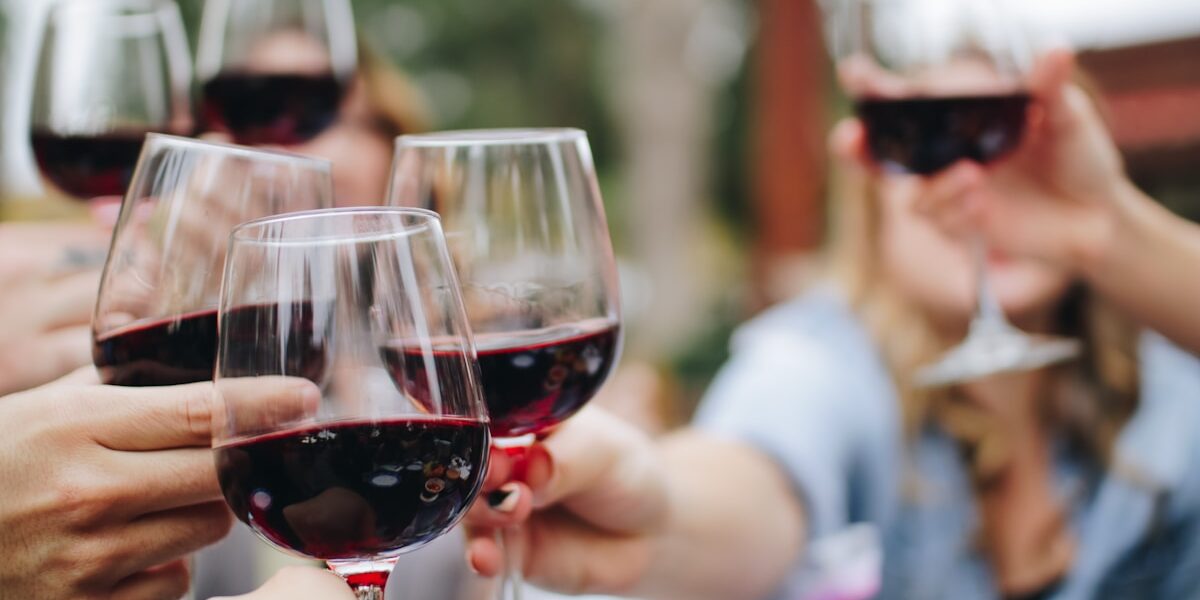
Cabernet Sauvignon was the wine that shifted my relationship with red wine from tolerance to genuine enthusiasm. I’d been drinking lighter reds — Pinot Noir, Beaujolais — and found them pleasant but a bit fragile. Then someone opened a bottle of Napa Cabernet that had been sitting in their cellar for a decade, and the experience was just different in kind from anything I’d had before. Dense, layered, something you could spend an hour with and still be finding things in it. I’ve been interested in Cabernet ever since.
Where Cabernet Came From
Cabernet Sauvignon is the child of Cabernet Franc and Sauvignon Blanc — a natural cross that occurred somewhere in France, most likely Bordeaux, probably in the 17th century. DNA analysis in the 1990s confirmed the parentage. It inherited the thick skin and small berries of Cabernet Franc and the aromatic qualities of Sauvignon Blanc, and the combination proved remarkably well-suited to winemaking. Thick skins mean concentrated flavors, substantial tannins, and deep color. Small berries mean a higher ratio of skin to juice, which intensifies everything further.
From Bordeaux, Cabernet Sauvignon has spread to essentially every wine-producing country in the world. It’s now the most widely planted red grape variety globally — a testament to how adaptable it is and how consistently it produces wines that people want to drink.
The Characteristics That Define It
The tannins in Cabernet Sauvignon are what you notice first if you’re new to it. That drying, grippy sensation in your mouth comes from polyphenolic compounds in the grape skins binding to proteins in your saliva. Young Cab can feel almost astringent. This is why proper serving temperature (60–65°F) and decanting matter — both soften the perception of tannin. And it’s why Cab ages so well: as the wine matures in the bottle, those tannins polymerize and soften, while the fruit integrates and secondary flavors develop.
The acidity is medium to high, which supports the aging process and gives the wine freshness even at high ripeness levels. Without enough acidity, Cabernet would feel flabby and overripe.
The Flavor Profile
The primary flavor of Cabernet Sauvignon is blackcurrant — cassis — which is almost uniquely characteristic of this grape. Black cherry and plum sit alongside it. Secondary flavors from oak aging include cedar, tobacco, cigar box, vanilla, and often violets. In cooler climates or when grapes don’t fully ripen, you get a characteristic bell pepper or eucalyptus note from a compound called pyrazine. Some people love this quality; others find it distracting. In warmer climates, it tends to disappear in favor of darker fruit and chocolate.
How Different Regions Express It
Bordeaux’s Left Bank — the Médoc, including Pauillac, Saint-Estèphe, and Margaux — is the original benchmark. Here, Cabernet is almost always blended with Merlot, Petit Verdot, and sometimes Cabernet Franc and Malbec. The Atlantic climate moderates temperatures, producing wines with structure, restraint, and significant aging potential. Bordeaux Cab tends to be more austere when young and more complex as it ages compared to New World equivalents.
Napa Valley in California is the most celebrated New World source. The warmer climate yields fully ripe grapes with rich dark fruit, plush tannins, and higher alcohol. Napa Cabernet tends to be immediately more accessible than young Bordeaux, with a riper, more opulent character. The best examples — Opus One, Screaming Eagle, Harlan, Stag’s Leap — are among the most expensive wines in the world. But good Napa Cab at $30–50 is genuinely excellent.
Chile’s Maipo Valley produces Cabernet that’s distinctive for its earthy, mineral quality alongside the fruit. Chilean Cab is often exceptional value — wines at $15–25 regularly over-deliver. Argentina makes Cab too, though Malbec remains that country’s signature.
Australian Cabernet, particularly from Coonawarra with its famous terra rossa soil and from Margaret River in Western Australia, often exhibits a mint or eucalyptus character — the pyrazine note — alongside the dark fruit. Some people find it compelling; it’s distinctly Australian in character.
South Africa’s Stellenbosch region produces Cab with a slightly smoky, earthy quality influenced by the soils and the bush vine farming practices common there.
Food Pairing
Grilled beef — ribeye, strip steak, lamb chops — is the natural home of Cabernet Sauvignon. The tannins bind to the fat and protein in the meat, creating the chemical interaction that makes both the wine and the food seem better. Hard cheeses aged cheddar and gouda work well too, for the same reason. Creamy mushroom or peppercorn sauces complement the wine’s secondary flavors.
One caution: avoid combining high-tannin Cabernet with spicy food. The interaction amplifies both the tannin grip and the heat perception, which creates an unpleasant experience. Zinfandel or Grenache handle spice better than Cab does.
Serving and Storing
Serve Cabernet at 60–65°F — cool, but not cold. Too warm and the alcohol dominates. Decant young Cab (under 8–10 years old) for at least 30 minutes, ideally an hour, before serving. It makes a real difference. Store bottles on their side at around 55°F in a place without light fluctuation or vibration. Good Cabernet from strong vintages can improve for 15–25 years; basic Cab is meant to be drunk within 3–5 years of release.

Stay in the loop
Get the latest wildlife research and conservation news delivered to your inbox.