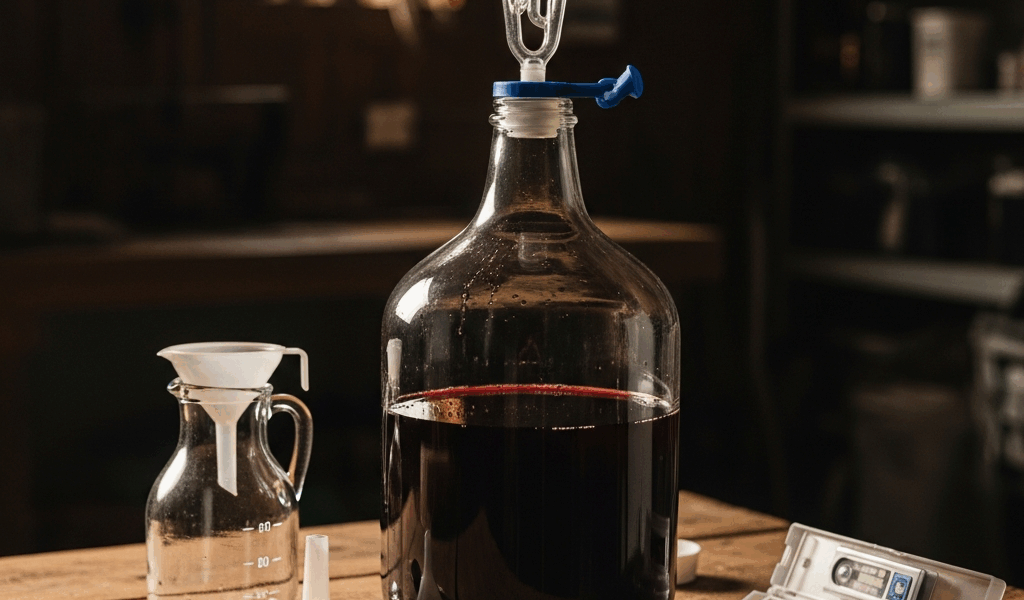
You checked your carboy this morning and nothing is happening. No bubbles in the airlock. The hydrometer reading hasn’t moved in three days. Your wine has stalled out somewhere between grape juice and something drinkable, and you’re not sure if it’s fixable or if you just wasted six gallons of juice.
Take a breath. A stuck fermentation is one of the most common problems in home winemaking, and it’s almost always recoverable. Here are the six most likely causes and exactly how to fix each one.
1. Temperature Dropped Too Low
This is the number one cause of stuck fermentations in home winemaking, and it’s the easiest to fix. Yeast slows down dramatically below 60°F and goes dormant below 55°F. If your fermentation vessel is in a garage, basement, or any space where nighttime temperatures dip, this is probably your problem.
The fix: Move the carboy to a warmer location — ideally 68°F to 75°F for reds, 60°F to 68°F for whites. Give it 24 to 48 hours. Most of the time, the yeast wakes back up and activity resumes on its own. If you need supplemental heat, a fermentation heating wrap or a seedling heat mat underneath the vessel works well. Don’t use a space heater pointed at the carboy — you want gentle, even warmth.
2. Sugar Level Was Too High to Start
Yeast can only tolerate so much sugar. Most wine yeast strains max out somewhere between 14% and 18% potential alcohol, and if your starting gravity was above 1.120, you may have asked the yeast to do more than it was capable of. The yeast worked until the alcohol concentration got too high for it to survive, then it quit — leaving residual sugar behind.
The fix: You have two options. Option one: pitch a high-alcohol-tolerant yeast strain like Lalvin EC-1118, which can handle up to 18% ABV. Rehydrate it properly, add a small amount of yeast nutrient, and pitch it into the stuck wine. Option two: if you’re close to your target gravity and the remaining sugar is minimal, you can stabilize with potassium sorbate and sulfite, accept the slight sweetness, and call it done.
3. Yeast Ran Out of Nutrients
Yeast doesn’t just eat sugar — it needs nitrogen, vitamins, and minerals to stay healthy and keep fermenting. Fruit wines and mead are especially prone to nutrient deficiency because honey and many fruits don’t contain the nitrogen levels that grape juice does. Without adequate nutrition, yeast weakens, produces off-flavors (hydrogen sulfide — that rotten egg smell), and eventually dies off before finishing the job.
The fix: Add a yeast nutrient blend like Fermaid-K or DAP (diammonium phosphate). Follow the manufacturer’s dosing guidelines for your batch size. Stir gently to incorporate — you want to mix the nutrient in without introducing too much oxygen at this stage. Nutrient additions often restart a stalled fermentation within 12 to 24 hours.
4. pH Is Too Low (Too Acidic)
Most wine yeast works best between pH 3.0 and 4.0. Below pH 2.8, the environment becomes hostile enough to stress or kill the yeast. This happens most often with high-acid fruits like cranberries, rhubarb, or very tart grape varieties. If you didn’t check your pH before pitching yeast, this could be your culprit.
The fix: Test the pH with a digital pH meter (test strips aren’t accurate enough for this). If it’s below 3.0, add small amounts of calcium carbonate (precipitated chalk) to raise the pH. Add a quarter teaspoon at a time, stir, wait 15 minutes, and test again. Don’t overshoot — you want to land in the 3.2 to 3.6 range for most wines. Once the pH is corrected, you may need to re-pitch fresh yeast.
5. Too Much Sulfite Before Fermentation
Campden tablets and potassium metabisulfite are essential for sanitizing your must before fermentation. But if you added too much — or didn’t wait long enough after adding it — the sulfite levels may still be high enough to suppress or kill your yeast. The standard recommendation is one Campden tablet per gallon, then wait 24 hours before pitching yeast. Doubling up or pitching too soon is a common beginner mistake.
The fix: Time and aeration. Sulfite dissipates naturally, especially with exposure to air. Stir the must vigorously for a few minutes to help off-gas the SO2, then wait another 12 to 24 hours. After that, re-pitch with fresh, properly rehydrated yeast. If you suspect very high sulfite levels, you can test with a free SO2 test kit — levels below 50 ppm are generally safe for most yeast strains.
6. The Yeast Was Dead on Arrival
Dry yeast packets have a shelf life, and yeast that’s been stored improperly — left in a hot car, sitting on a warehouse shelf for two years, or exposed to temperature swings — may not be viable when you pitch it. If you never saw any fermentation activity at all (no bubbles, no foam, no gravity change), dead yeast is the most likely explanation.
The fix: Get a fresh packet of yeast. Rehydrate it in warm water (95°F to 105°F) with a pinch of sugar for 15 minutes. You should see it foam and come alive before you add it to the must. If the rehydrated yeast doesn’t show activity within 20 minutes, it’s dead too — try a different packet or a different brand. Once you have active, foaming yeast, pitch it into your must and you should see fermentation start within 6 to 12 hours.
A stuck fermentation feels like a crisis when you’re staring at a silent airlock, but it’s almost never a total loss. Work through these six causes in order — temperature first, then sugar, nutrients, pH, sulfite, and yeast viability — and you’ll find the problem. Most of the time, the fix takes less than a day to show results.

Stay in the loop
Get the latest winemaker's friend updates delivered to your inbox.