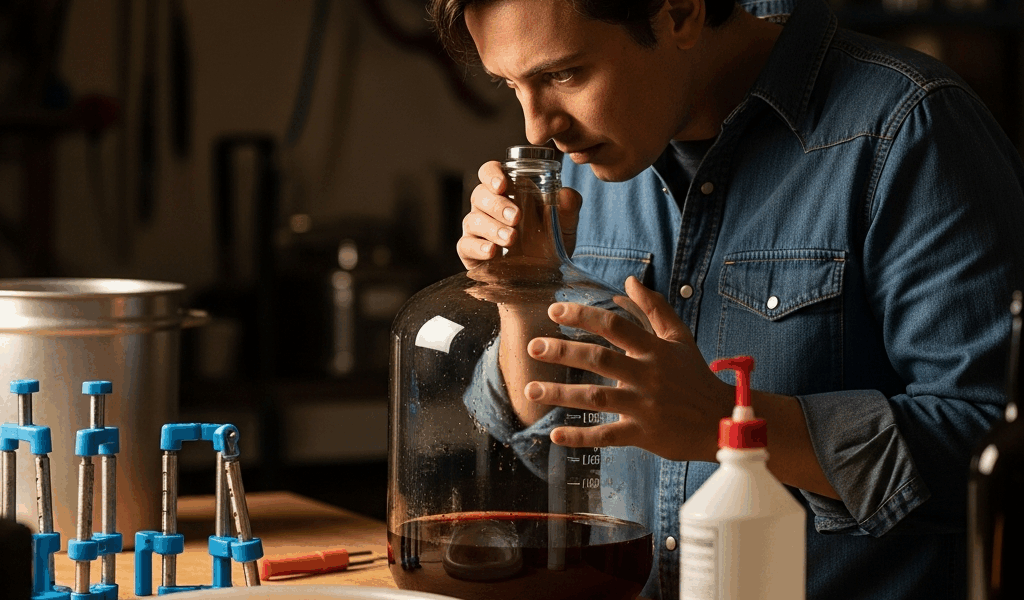
Homemade wine smelling like vinegar has gotten complicated with all the contradictory forum advice flying around — half telling you to dump it, the other half insisting it is fine.

This article includes affiliate links. We may earn a commission at no extra cost to you.
You pulled the airlock off your carboy to take a sample and caught a sharp, acetic hit that made you flinch. That’s vinegar. Or at least it’s headed that way. You’re standing in your garage wondering if your six-month project just turned into salad dressing.
Here’s the honest answer: it depends on how far it’s gone. A faint vinegar smell is often salvageable. A strong, obvious vinegar odor means acetobacter bacteria have gotten a foothold, and the options get narrower. Let me walk you through what’s actually happening and what you can do about it.
Why Your Wine Smells Like Vinegar
The smell is acetic acid, produced by acetobacter bacteria. These bacteria are everywhere — on fruit skins, in the air, on your equipment. They convert ethanol (alcohol) into acetic acid (vinegar) in the presence of oxygen. That last part is critical: acetobacter needs oxygen to work. A properly sealed fermentation vessel with an active airlock keeps oxygen out and acetobacter suppressed.
The most common ways acetobacter gets a foothold in home wine:
Headspace. Too much air in the carboy above the wine. Every inch of headspace is oxygen exposure. After primary fermentation ends and you rack to secondary, the vessel should be filled to within an inch of the airlock.
Fruit flies. Those tiny flies hovering around your fermenter aren’t just annoying — they carry acetobacter on their bodies. One fruit fly landing in your must can introduce the bacteria. This is why airlocks and covered primary fermenters matter.
Slow or stuck fermentation. Active fermentation produces CO2, which blankets the wine surface and displaces oxygen. When fermentation stalls, that protective CO2 layer dissipates, and oxygen-loving bacteria move in.
Insufficient sulfite. Campden tablets and potassium metabisulfite suppress acetobacter. If you skipped the pre-fermentation sulfite dose or haven’t maintained sulfite levels during aging, you’ve left the door open.
Can You Fix Vinegar-Smelling Wine?
If the smell is faint (barely noticeable on the nose): You can likely save it. Add a Campden tablet per gallon immediately to kill the acetobacter. Top off the carboy to eliminate headspace. Rack the wine off any sediment into a clean, sanitized vessel. The small amount of acetic acid present may blow off during aging or be masked by the wine’s other flavors. Taste it in two weeks — if it’s clean, you’re fine.
If the smell is moderate (clearly vinegar but not overwhelming): This is the gray zone. Sulfite the wine immediately and eliminate headspace. The acetic acid that’s already formed won’t go away — sulfite only stops further production. You can try blending this wine with a clean, strongly flavored batch to dilute the acetic character. Some winemakers report success with cold stabilization (chilling to near-freezing for a week) to reduce perceived acidity. Taste honestly. If it’s unpleasant, blending or distilling (where legal) may be your best options.
If the smell is strong (unmistakably vinegar): The wine is not recoverable as wine. Acetobacter has converted enough alcohol to acetic acid that no amount of blending will mask it. You have two options: let it go fully to vinegar (it’ll make excellent cooking vinegar — rack it into a wide-mouth jar, cover with cheesecloth, and let acetobacter finish the job) or pour it out.
Preventing Vinegar in Future Batches
Prevention is straightforward once you understand that acetobacter needs oxygen:
Keep airlocks filled and sealed at all times. Minimize headspace after racking — use glass marbles, a smaller vessel, or top off with a similar finished wine. Maintain sulfite levels with periodic Campden tablet additions during aging (one quarter tablet per gallon every two to three months). Keep fruit flies away — screens on windows, covered fermenters, and clean workspaces.
And sanitize everything. Every surface that touches your wine should be cleaned and sanitized. Acetobacter colonies can survive on poorly cleaned equipment and infect batch after batch. A Star San or potassium metabisulfite rinse on all equipment before use eliminates this risk.
A vinegar smell doesn’t automatically mean your batch is ruined. Catch it early, sulfite it hard, seal it tight, and you’ll often save the wine. Catch it late, and you’ll learn a lesson about airlock management that you won’t forget. Either way, the next batch will be better for it.

Stay in the loop
Get the latest winemaker's friend updates delivered to your inbox.