This article includes affiliate links. We may earn a commission at no extra cost to you.
Campden tablets vs potassium sorbate has gotten complicated with all the conflicting forum posts and outdated recipe books flying around.
You’re bottling day-minus-one and someone on a winemaking forum told you to add Campden tablets. Someone else said potassium sorbate. A third person said both. You’ve got both packets sitting on the counter and you’re not entirely sure which one does what — or whether using the wrong one at the wrong time will wreck your batch.
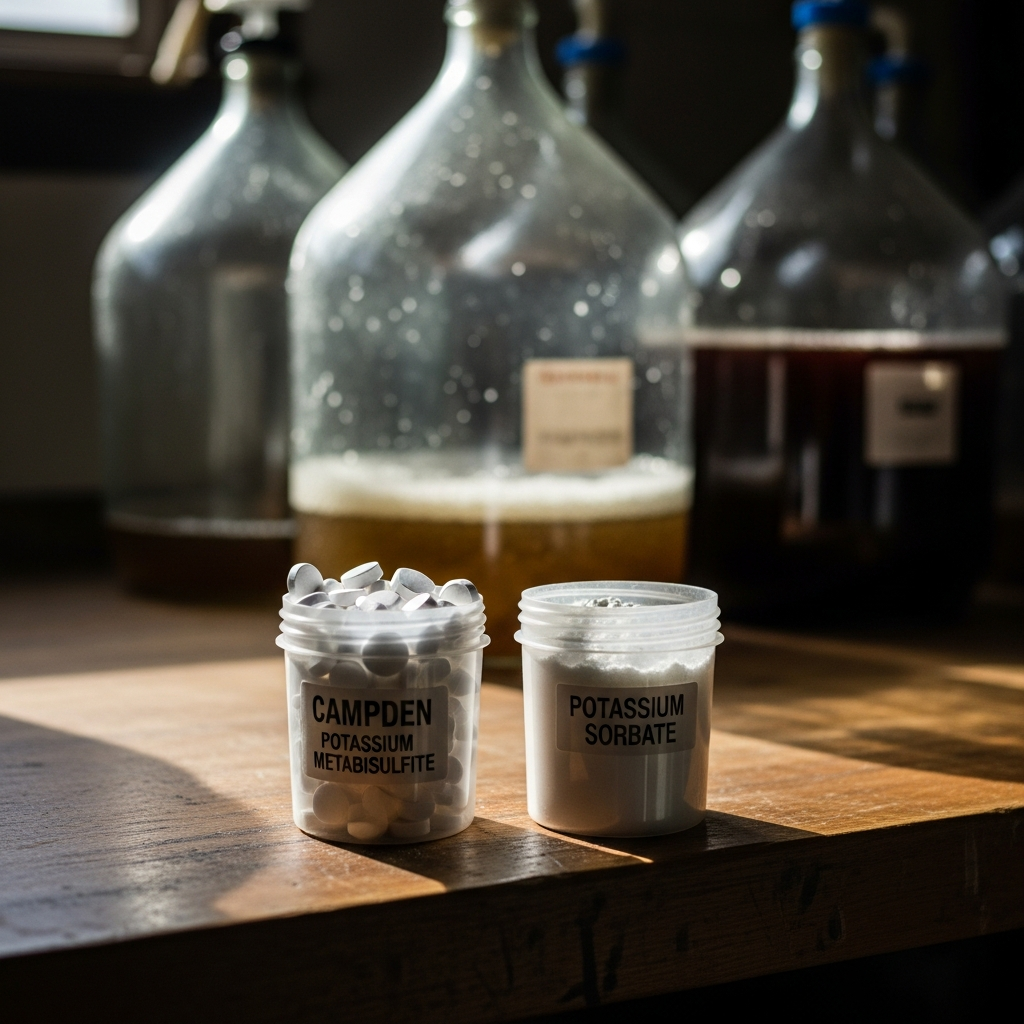
These two additives get confused constantly in home winemaking, and the confusion matters because they do completely different jobs.
What Campden Tablets Actually Do
Campden tablets are potassium metabisulfite or sodium metabisulfite pressed into tablet form. When dissolved in wine or must, they release sulfur dioxide (SO2), which serves two purposes: it kills wild yeast and bacteria, and it acts as an antioxidant to prevent browning and oxidation.
You use Campden tablets at two points in the winemaking process. First, before fermentation — crush one tablet per gallon into your must, wait 24 hours for the SO2 to do its sanitizing work, then pitch your cultured yeast. The 24-hour wait is critical because active SO2 will kill your wine yeast too.
Second, at bottling — a quarter to half a tablet per gallon provides a protective dose of SO2 that prevents oxidation and microbial activity in the bottle. This is why commercial wines contain sulfites: they’re the preservative that keeps the wine stable on the shelf.
What Campden tablets do NOT do: they don’t prevent refermentation. They kill active organisms, but they don’t stop new yeast from growing if sugar is present. That’s the job of the other product.
What Potassium Sorbate Does
Potassium sorbate doesn’t kill yeast. It prevents yeast from reproducing. That’s an important distinction. Existing yeast cells continue to live and can still ferment slowly, but they can’t multiply, which means the yeast population dwindles naturally and fermentation stops.
You use potassium sorbate when you want to stabilize a wine that contains residual sugar — or when you’re back-sweetening a dry wine before bottling. Without sorbate, adding sugar to a finished wine is an invitation for dormant yeast cells to wake up and referment in the bottle. Refermentation in sealed bottles builds pressure. Pressure pops corks. Popped corks make a mess and waste wine.
The standard dose is one half teaspoon per gallon. Always add it with a Campden tablet — sorbate alone is not enough because it doesn’t prevent bacterial spoilage, and bacteria can metabolize sorbate itself into compounds that smell like geraniums. Nobody wants geranium-scented Merlot.
When to Use Which
Before fermentation: Campden tablets only. One per gallon, wait 24 hours, pitch yeast. Never add sorbate before fermentation — it would prevent your yeast from multiplying and you’d get a stuck ferment.
At bottling (dry wine, no back-sweetening): Campden tablets only. A quarter tablet per gallon for SO2 protection. No sorbate needed because there’s no sugar for yeast to ferment.
At bottling (back-sweetened or residual sugar): Both. Potassium sorbate to prevent refermentation, plus a Campden tablet for antioxidant and antimicrobial protection. This is the one scenario where you absolutely need both products working together.
During bulk aging: Campden tablets, periodically. A quarter tablet per gallon every two to three months during extended aging helps maintain protective SO2 levels. Sorbate is not used during aging.
Common Mistakes to Avoid
Using sorbate without sulfite is the biggest one. Sorbate by itself is vulnerable to bacterial degradation, which produces a geranium-like off-flavor that’s impossible to remove. Always pair sorbate with a Campden tablet.
Adding sorbate to a wine that’s undergone malolactic fermentation (MLF) can also produce that geranium off-flavor. The lactic acid bacteria interact with sorbate in unpleasant ways. If your wine has been through MLF, stabilize with cold crashing and careful sulfite management instead of sorbate.
Over-sulfiting is the other common mistake. Too many Campden tablets produce a harsh, burnt-match smell and taste. Stick to the recommended doses and you won’t have problems. If you do over-sulfite, aeration and time will help — splash-rack the wine and give it a few weeks to blow off the excess SO2.
Think of it this way: Campden tablets are your sanitizer and preservative. Potassium sorbate is your birth control for yeast. Different tools, different jobs, and the smartest move is knowing exactly when each one belongs in the process.

Stay in the loop
Get the latest winemaker's friend updates delivered to your inbox.